How to Choose Catheter Leg Bag Holders and Straps (Complete Buyers Guide)
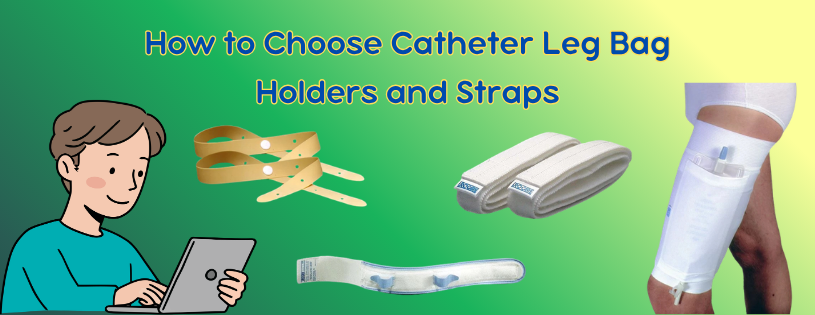
How to Choose Catheter Leg Bag Holders and Straps (Complete Buyers Guide)
What Are Catheter Leg Bag Holders and Straps and How Do They Work?
Urinary leg bag holders and straps help keep a urine drainage bag secured against the thigh or calf during the day. They are used with condom or foley catheter leg bags that collect urine from a Foley catheter, external condom catheter, or another urinary drainage setup.
A good holder or strap helps with three main things:
Support: Helps carry the weight of the urine bag as it fills.
Stability: Reduces pulling on the catheter tubing or leg bag.
Comfort: Helps keep the bag positioned against the leg without rubbing against skin.
Catheter leg bag straps wrap around the thigh or calf and attach directly to the drainage bag. They provide a simple, adjustable way to secure the bag and replace worn or stretched straps.
Leg bag holders work more like a sleeve or pocket. The bag sits inside the holder, which helps spread pressure over a wider area and creates a softer barrier between the bag and the skin.
The right choice depends on where the bag is worn, how much support the user needs, skin sensitivity, and activity level.
Types of Urinary Leg Bag Holders
Urinary leg bag holders are available as pocket-style fabric sleeves, stretch support sleeves, compression-style holders, and fabric-covered catheter bag systems. Each design supports the drainage bag in a different way. Pocket holders place the bag inside a fabric pouch, stretch sleeves hold the bag close to the leg with flexible material, and fabric-covered systems build the support layer directly into the bag.
Fabric Sleeve Leg Bag Holders
Fabric sleeve holders use a pocket-style design. The urine bag slides into the holder instead of resting directly against the skin. This gives the bag a more covered, stable feel and helps reduce direct contact between the plastic bag and the leg.
The Urocare upper-leg holder is made for thigh placement. It has a side pocket for the bag, uses a soft cotton blend, and can be worn on the inside or outside of the thigh.
The Urocare lower-leg holder works the same general way, but it is made for calf placement. It also uses a pocket design, removes the need for separate catheter leg bag straps, and can be worn on the inside or outside of the calf.
Main takeaway:
Fabric pocket holders focus on comfort, skin separation, and keeping the leg bag more discreet under clothing.
Compression and Stretch Leg Bag Sleeves
Stretch urine bag sleeves use flexible fabric to hold the drainage bag close to the thigh or calf. Instead of relying on narrow straps, the sleeve spreads support across a wider area.
The CarePocket catheter bag holder is a good example. It has a wide top opening for the bag, a bottom opening for the drain tap, and stretchy breathable fabric. It can be worn on the thigh or calf.
The Coloplast Conveen Active has the holder built into the urine bag design. Its fabric-covered bag wraps around the thigh with no-slip silicone straps, and the hide-away tap allows drainage without removing the system.
Main takeaway:
Stretch sleeves focus on flexible support, lower bag movement, and a smoother fit under clothing. They should feel secure, not tight. Any holder or strap that leaves deep marks, pinches, or affects circulation needs to be adjusted.
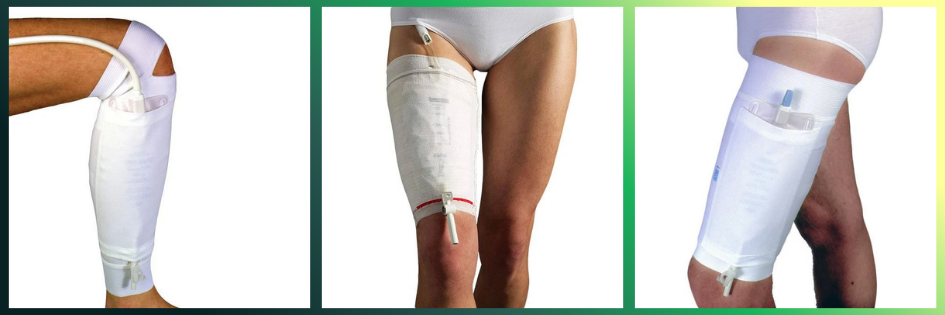
Thigh vs Calf Leg Bag Placement Options
Leg bags can be worn on the thigh or calf, depending on comfort, clothing, tubing length, and the product being used.
Thigh placement keeps the bag higher on the leg and can feel more discreet under looser pants, dresses, or longer shorts. It also reduces the length of tubing needed.
Calf placement keeps the bag lower on the leg and may work better with certain pants or larger bag setups. It can also make the drain tap easier to reach.
Types of Urinary Leg Bag Straps
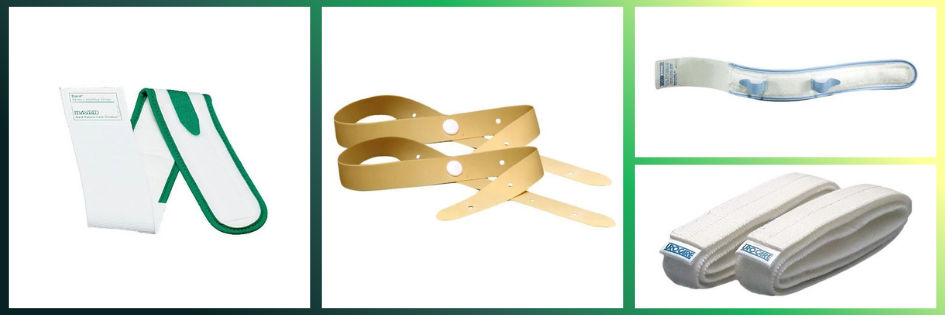
Urinary bag straps attach to the urinary leg bag’s strap holes, buttons, or built-in attachment points to hold the bag against the thigh or calf. The main strap styles are adjustable Velcro straps, button closure straps, and strap systems that come with or match specific leg bags.
Adjustable Velcro Leg Bag Straps
Adjustable Velcro straps are made for quick fitting and easy repositioning. They are helpful for users with limited hand strength, joint stiffness, or reduced finger dexterity.
Key benefits:
- Adjustable fit
- Easy fastening
- Simple removal
The Urocare universal straps are a simple fabric option made with elasticized cotton and self-gripping fasteners. They work with vinyl, latex and rubber urinary leg bags.
Bard deluxe straps are another straightforward Velcro option. They are latex-free, washable, and adjustable from 8" to 24".
Button Closure Leg Bag Straps
Button closure straps create a secure connection between the strap and the bag. The buttons fasten through the bag’s attachment holes or tabs, helping keep the bag supported during wear. This style gives the bag a more fixed hold without relying on Velcro.
Key benefits:
- Secure attachment
- Reusable design
- Direct bag connection
Urocare latex button straps are replacement straps made specifically for the Urocare reusable latex leg bag line. They provide a direct button-style attachment for compatible Urocare bags and contain natural rubber latex, so they are not appropriate for users with a latex allergy.
Urocare Fitz-All fabric button straps use soft elasticized cotton with no latex and large easy-grip buttons. They are washable, reusable, and include one upper and one lower calf strap.
Brand-Specific and Pre-Attached Strap Systems
Some leg bags come as complete systems with the bag, straps, drainage valve, and anti-reflux features already included. This keeps the setup simple because the user does not need to match separate straps to a separate bag.
Medline twist-valve leg bags come with attached comfort straps and an adjustable button closure. McKesson anti-reflux urine bags also include flexible straps, a twist valve, and an anti-reflux valve to help reduce urine backflow.
These all-in-one systems can be useful for users who want fewer separate pieces to manage. They also work well as backup leg bags because the straps are already included and ready to use when needed.
How to Measure for a Urinary Leg Bag, Holder, or Strap
A urinary leg bag does not need to be measured to the leg, but the strap, sleeve, or holder does. These accessories need to match the thigh or calf area where they will be worn. Measure that exact spot so the bag can stay supported without slipping, pinching, or restricting circulation.
How to Measure Correctly
- Use a flexible measuring tape. If you don’t have one, wrap a string or shoelace around the leg, mark where the ends meet, then measure that length with a ruler or standard tape measure.
- Measure against bare skin, not over pants, socks, or compression clothing.
- Stand while measuring so the leg is in its normal position.
- Wrap the tape around the thigh or calf where the holder, sleeve, or strap will sit.
- Keep the tape flat and level all the way around the leg.
- Measure gently. The tape should touch the skin without digging in.
- Write the measurement down and compare it to the product’s sizing chart.
Measuring for Thigh Placement
For thigh placement, measure around the upper thigh where the bag or holder will sit. This placement keeps the bag higher on the leg and is commonly used with upper-leg holders, thigh sleeves, and thigh strap setups.
Measuring for Calf Placement
For calf placement, measure around the widest part of the calf. Calf placement keeps the bag lower on the leg and can work well for smaller daytime leg bags or users who prefer a lower, easier-to-reach drainage position.
Measuring for Sleeve Holders
For sleeve holders, measure the circumference of the leg where the sleeve will rest. Check the product’s stretch range carefully, because the sleeve needs to stay secure without rolling, pinching, or feeling too tight.
Measuring for Leg Bag Straps
For straps, measure each area where a strap will wrap. Many catheter bags use one upper strap and one lower strap, so both points should be measured separately. Leave enough room for normal movement and daily swelling. A urinary leg bag does not need to be measured to the leg, but the strap, sleeve, or holder does. These accessories need to match the thigh or calf area where they will be worn. Measure that exact spot so the bag can stay supported without slipping, pinching, or restricting circulation.
How to Choose the Best Urinary Leg Bag Holder or Strap for Daily Wear
Choosing a catheter bag holder or strap comes down to four things: compatibility, fit, comfort, and daily routine. The right option should hold the bag securely without pulling on tubing, irritating the skin, or making the bag harder to empty.
Check Leg Bag Compatibility
Start by looking at how the leg bag is designed to be supported. Some bags work best with straps that attach to holes or tabs, while others can be supported inside a sleeve or pocket-style holder.
Universal straps work with many standard leg bags, while brand-specific straps are made to match certain bag systems. Sleeve and pocket holders offer more flexibility because they hold the bag from the outside instead of attaching to specific holes or tabs.
Compare Holders and Straps
A holder works well for users who need more comfort between the bag and skin. The extra fabric helps reduce direct bag-to-skin contact and chafing during daily wear.
Straps work well for users who prefer a lighter, simpler setup. They attach directly to the urine bag, adjust quickly, and are easy to replace when they stretch out or lose support.
A sleeve-style holder can help users who want secure support without tight bands around the leg. The stretch fabric keeps the bag close to the leg while spreading support over a wider area.
Choose the Right Fit and Placement
The fit should be snug, not tight. A holder or strap should support the bag without pinching, leaving deep marks, or restricting circulation.
Thigh placement keeps the bag higher on the leg and may be easier to hide under certain clothing. Calf placement keeps the bag lower and may work better for smaller leg bags or a lower drainage position.
The bag should stay below bladder level, the tubing should not kink, and the drain valve should point downward.
Consider Skin Comfort and Materials
Users with fragile skin may need soft fabric, wider support, or a holder that keeps the plastic bag off the skin.
Avoid latex straps if you have a latex allergy or sensitivity. Check for rubbing, sweating, pressure marks, or irritation during wear. A support accessory should feel secure without digging into the leg.
Match Support to Daily Routine
Light daily routines may work well with basic adjustable straps. If the user is more active throughout the day, fabric straps, sleeve holders, or pocket holders can help keep the bag from shifting. For higher activity, choose support that holds the bag close to the leg without feeling too tight.
Ease of use also matters. Velcro straps adjust quickly and can be easier for users with limited hand strength. Button straps provide a firm hold but require more finger control. Pre-attached strap systems keep setup simple because the straps already come with the bag.

Why Urocare Reusable Latex Leg Bags Require Specific Straps
Urocare reusable latex leg bags are designed for repeated use, so worn or stretched straps can be replaced without replacing the entire bag. This is one of the main benefits of staying within the Urocare system. The bag, valves, adaptors, and replacement straps are built to work together as a long-term drainage setup.
Recommended Strap Types for Urocare Leg Bags
Urocare fabric straps are the comfort-focused option. They use elasticized cotton, Velcro fasteners, and are available as upper or lower straps in multiple sizes. They are washable, reusable, and helpful when a customer wants a softer strap with easier adjustment.
Urocare latex button straps are the direct replacement option for the Urocare reusable latex leg bag line. They include latex straps and plastic buttons, giving compatible Urocare bags a secure button-style attachment. Because they contain natural rubber latex, they should not be used by customers with a latex allergy or sensitivity.
Can You Use Standard Leg Bag Holders With Urocare Bags?
Yes, some standard catheter bag holders can be used with Urocare bags. The holder needs to fit the bag securely, keep it supported, and leave the drain valve easy to reach. Sleeve and pocket-style holders can work well because the bag sits inside the holder instead of attaching directly to the Urocare strap buttons.
Tips for Comfort and Longevity With Urocare Systems
- Keep the bag supported with both an upper and lower strap.
- Adjust the straps so they are snug, not tight.
- Replace straps when they stretch out, wear down, or stop holding well.
- Wash fabric straps regularly to help keep them comfortable and clean.
- Avoid latex straps if there is a latex allergy or sensitivity.
Common Problems With Leg Bag Straps and Holders and When to Replace Them
Leg bag straps and holders should keep the bag secure without slipping, rubbing, or feeling too tight. If the setup becomes uncomfortable, the issue is usually fit, placement, compatibility, or worn-out materials.
Leg Bag Slipping Down
A bag may slip when the strap is loose, the holder is too large, or the bag is getting too full.
Fix it by:
- Emptying the bag sooner
- Adjusting the strap or holder placement
- Replacing stretched-out straps
Skin Irritation or Chafing
Irritation can come from rubbing, sweat, tight straps, or direct plastic contact against the skin.
Fix it by:
- Loosening tight straps
- Keeping skin clean and dry
- Using a fabric holder or sleeve
- Avoiding latex straps if the user has a latex sensitivity
Straps Too Tight or Too Loose
Straps should feel snug, not tight. Tight straps can leave marks or affect circulation. Loose straps can let the bag swing or pull. Fix it by adjusting the strap until the bag feels secure without digging into the skin.
Poor Fit or Compatibility Issues
Not all straps work with all catheter bags. Check the bag’s strap holes, buttons, size, and drain valve position before choosing a holder or strap.
When to Replace Straps or Holders
Replace straps or holders when they stop supporting the bag well.
Common signs include:
- Weak Velcro
- Loose buttons
- Fraying or tearing
- Stains or odor that do not wash out
Frequently Asked Questions About Urinary Leg Bag Holders and Straps
Can you use any strap with any urinary leg bag?
No. The strap needs to match the bag’s attachment style, size, and placement. Some straps are universal, while others are made for specific catheter bag systems. Always check whether the bag uses strap holes, buttons, tabs, or a built-in support setup.
Are leg bag holders better than straps?
Not always. Holders provide more fabric coverage and help separate the bag from the skin. Straps are simpler, lighter, and easier to replace. The better option depends on comfort, skin needs, activity level, and the leg bag being used.
How tight should a leg bag strap be?
It should be snug, not tight. The strap should hold the bag in place without pinching, leaving marks, or restricting circulation. If the strap digs into the skin, it should be loosened or replaced with a better-fitting option.
Can you wear a leg bag without straps?
No, not without some type of support. A leg bag needs a support system to keep it secure. Wearing a leg bag without support can cause slipping, pulling on tubing, or leaks.
What is best for sensitive skin?
Soft fabric support is best for sensitive skin. Fabric holders, stretch sleeves, or wider soft straps can help reduce rubbing and direct bag-to-skin contact. Latex straps should be avoided if there is a latex allergy or sensitivity.
Final Thoughts: Choosing the Right Leg Bag Holder or Strap for Comfort and Security
A comfortable leg bag setup depends on secure support, proper fit, skin comfort, and compatibility with the bag being used. Straps, sleeves, and holders all help keep the bag in place, but the details matter during daily wear.
The holder or strap should support the bag as it fills, reduce tension on the tubing, and stay comfortable against the leg. It should not slip, pinch, rub, leave marks, or make the drain valve hard to reach.
Taking time to check size, placement, material, and attachment style can make urinary catheter bag use feel more stable and manageable. A better-fitting support setup can improve comfort, reduce daily adjustments, and make the drainage system easier to wear with confidence.

Explore Our Newest Medical Guides & Insights

Compression Stockings and Socks Resource Center: FAQs and Related Reading

Compression Socks and Stockings Buying Guide: How to Choose the Right Size and Style

Knee-High vs. Thigh-High Compression Stockings: Which Is Right for You?

What Compression Level Do I Need? Understanding mmHg for Compression Socks

Best Compression Socks for Varicose Veins: How to Choose the Right Pair