Sterile Gloves for Home Care: When to Use Them and How to Choose

Sterile Gloves for Home Care: When to Use Them and How to Choose
Sterile gloves are disposable medical gloves that have been sterilized and sealed so they stay free of contamination until the package is opened. People use sterile gloves at home for medical needs like dressing changes, catheter maintenance, ostomy care, and recovery after surgery.
What Are Sterile Gloves?
Sterile gloves are single-use medical gloves that have gone through a sterilization process before they are packaged, to eliminate any germs on the product.
Sterility depends on both the glove and the packaging. Sterile gloves must be kept in intact sterile packaging until they are ready to be used. If the packaging is damaged, wet, open, or handled in a way that may expose the gloves to contamination, the gloves are not sterile.
Hands should still be washed or sanitized before and after using sterile gloves. Gloves add protection, but they don’t wash your hands for you.
Sterile Gloves vs. Non-Sterile Gloves
Sterile gloves and non-sterile gloves both help protect the hands during hands-on personal care, but they are not meant for the same situations. Sterile gloves are used for more controlled medical needs, especially before touching a wound, dressing, catheter, or sensitive area.
Non-sterile gloves are the more everyday option. They are often used for general cleaning when sterility is not required. They still help reduce direct contact with germs and body fluids, but they are not sterilized and packaged the same way sterile gloves are.
Types of Sterile Gloves
Sterile Latex Gloves
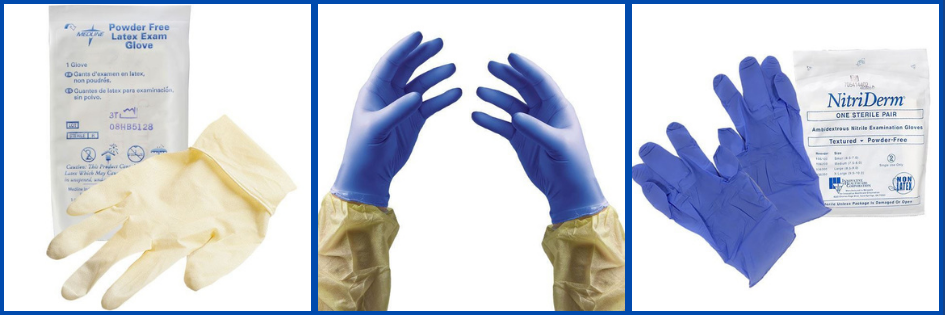
Sterile latex gloves fit close to the hand and are very flexible, making them a comfortable option for personal medical needs. DermAssist Sterile Latex Gloves have a softer latex feel and an ambidextrous design for simple use. Medline Sterile Latex Pairs are powder-free sterile latex gloves with a flexible fit.
Sterile Nitrile Gloves
Sterile nitrile gloves are latex-free and have a stronger, more protective feel than latex. NitriDerm Sterile Nitrile Pairs are powder-free, textured for grip, and made with a beaded cuff to help the glove stay in place. NitriDerm Sterile Nitrile Singles offer the same latex-free material in single-glove packaging.
Trusted Sterile Glove Brands
Innovative Healthcare Gloves
NitriDerm Sterile Nitrile Pairs
- Latex-free nitrile for users avoiding latex
- Textured grip and beaded cuff for a secure fit
DermAssist Sterile Latex Gloves
- Flexible latex with a softer, natural feel
- Ambidextrous design for simple use
NitriDerm Sterile Nitrile Singles
- Latex-free nitrile in single-glove packaging
- Practical when only one sterile glove is needed
Medline Industries Gloves
- Powder-free sterile latex with a flexible fit
- Packaged in pairs for two-hand use
- Sterile latex in single-glove packaging
- Helps reduce waste when a full pair is not needed
How to Choose the Right Sterile Gloves
Choosing the right sterile gloves comes down to fit, material, comfort, and how the gloves will be used. A glove that is too tight can feel uncomfortable and restrict movement, while a glove that is too loose can slip or bunch together. Users should check the available sizes before buying and choose the option that fits closest to their normal glove size.
Material is just as important. Latex gloves are soft, flexible, and have a more natural feel, but they are not a good choice for anyone with a latex allergy or sensitivity. Nitrile gloves are latex-free and have a stronger, more protective feel, making them a better option for users who want to avoid natural rubber latex.
Personal preference also matters. Some users prefer the stretch and feel of latex, while others prefer the firmer fit of nitrile.
Affordability depends on how often sterile gloves are used. Users who need sterile gloves regularly may want to compare box quantities, singles versus pairs, and material options before buying. The best choice is the glove that fits properly, avoids known sensitivities, and matches the needs of the user.
FAQ About Sterile Gloves
When should sterile gloves be used at home?
Sterile gloves should be used for basic wound care, catheter maintenance, and handling of other sensitive medical supplies.
Can sterile gloves be reused?
No. Sterile gloves are designed for one-time use only. Once they are opened, worn, or contaminated, they are no longer sterile and should be thrown away.
Are nitrile sterile gloves latex-free?
Yes. Nitrile sterile gloves are made without natural rubber latex, making them a common option for users with latex allergies or sensitivities. It still helps to check the packaging to confirm the glove material before buying.
What is the difference between exam gloves and sterile gloves?
Exam gloves are usually used for everyday tasks where the user doesn't want their hands to get dirty or just to be a bit cleaner. Sterile gloves are individually packaged and processed to help reduce contamination during wound care or other sensitive procedures.
Do all dressing changes require sterile gloves?
No. Some dressing changes of non-serious wounds can be done with clean, non-sterile gloves. Sterile gloves are more commonly used for surgical wounds, medical supplies, or when a user wants to take an extra step towards total cleanliness.
How do I know what glove size to buy?
Before buying sterile gloves, check the product’s size chart and compare it to your hand. Most glove sizing is based on palm width, hand circumference, or numbered glove sizes, depending on the brand. The right size should fit the hand without pinching the skin or leaving loose material around the hand.
How to Put on Sterile Gloves Correctly
Putting on sterile gloves correctly helps keep the glove surface clean before use. The main goal is to avoid touching the outside of the glove with bare hands or letting the gloves come into contact with counters, clothing, sinks, or other non-sterile surfaces. Starting with clean, dry hands also makes the gloves easier to put on and helps reduce the chance of contamination during a dressing change, catheter routine, or other home medical process.
- Wash your hands for 30 seconds with warm water and soap
- Dry your hands completely with paper towels or napkins
- Put a glove on your dominant hand by touching only the inside cuff
- Use your gloved hand to slide the glove onto your other hand
- Keep hands above the waist and avoid touching anything non-sterile
Common Uses for Sterile Gloves at Home
Sterile gloves are used for home medical routines that involve open skin, fresh bandages, catheters, stomas, or surgical areas. They are not needed for every situation, but they can lower the chance of bringing germs into an area that is still healing or more vulnerable to infection.
Wound Care and Dressing Change
Cleaning a wound, covering open skin, or placing a fresh bandage over a surgical incision are all more sensitive tasks that require sterility. The main goal is to keep the new dressing clean before it touches the wound.
A few simple habits matter:
- Remove the old dressing first, then wash hands again if needed.
- Touch the new gauze or bandage as little as possible.
- Avoid touching the side of the dressing that will sit against the wound.
- Replace the dressing if it becomes wet, dirty, loose, soaked, or starts leaking.
A wound should be watched closely during each change. Redness that spreads, worsening pain, a bad smell, fever, or a wound that starts re-opening are all signs that medical help may be needed.
Catheter Care
Sterile gloves may be used with Foley catheters, intermittent catheters, and drainage supplies because these products connect to sensitive areas of the urinary system, so clean handling is needed to keep unwanted germs away.
Gloves can be used with both Foley and intermittent catheters when cleaning around the catheter, handling tubing, emptying a drainage bag, or changing related supplies. They help keep the routine cleaner and reduce direct contact with urine, skin, and catheter parts. For intermittent catheter use, sterile gloves may also be helpful during insertion.
Sterile gloves do not prevent every urinary tract infection, but they can support cleaner handling during catheter routines.
Ostomy Care
Sterile gloves are not usually required for regular ostomy pouch changes, but they are used soon after surgery or when the skin around the stoma is still healing. A stoma is a surgical opening, so the surrounding skin can be sensitive, especially during recovery.
Home Care for Surgery or Conditions
Sterile gloves may be used after surgery when changing bandages or cleaning an incision. They help keep fresh gauze, tape, and other wound-covering supplies cleaner before they touch the healing area.
Sterile gloves may also be used for some tracheostomy care. A trach is the breathing opening some people have in the front of the neck after surgery or serious breathing problems. Gloves may be used when cleaning around the opening, changing the dressing, or handling sterile suction supplies.
Sterile gloves are not something every home routine needs. They are best saved for situations where germs could more easily reach broken skin, healing tissue, or sensitive medical areas. In those moments, clean hands, organized supplies, and fresh gloves all work together to make the process cleaner.
Sterile gloves help lower the chance of germs getting into places where they can cause problems. That matters most when someone is caring for a wound, healing skin, a catheter, a stoma, or an area that is still recovering after surgery.
They also help protect sensitive areas from everyday germs on the hands. Even clean hands can pick up bacteria from sinks, towels, clothing, phones, counters, and supply packaging. Sterile gloves add a cleaner barrier before touching fresh gauze, medical supplies, or skin that is not fully healed.
They can also reduce cross-contamination. This means not carrying germs from one surface to another. For example, the same gloves should not be used to remove an old bandage and then place a new one. Once gloves touch drainage, urine, stool, trash, or a dirty surface, they should be removed and replaced.
For caregivers, sterile gloves make it easier to follow a cleaner routine at home. They do not replace handwashing or careful supply setup, but they support safer recovery after surgery, illness, or injury by helping keep the clean parts of the process clean.
Why Are Sterile Gloves Important for Home Care?
Sterile gloves matter because some areas of the body are easier to contaminate than others. Open wounds and healing incisions need more careful handling than normal skin. Catheter areas and stomas can also need extra care because they involve sensitive tissue or medical supplies that should stay clean.
They are also helpful when fresh supplies need to stay clean, such as gauze or catheter parts that should not touch dirty surfaces. Dressings should stay protected until they are placed over the wound.
Sterile gloves also help reduce cross-contamination. Gloves used to remove an old bandage or handle used supplies should come off before fresh gauze or a new dressing is touched. Clean hands or a new pair of gloves should be used only for the clean part of the routine.
During recovery at home, sterile gloves help keep fresh supplies away from germs on the hands. They can be used by the user or a caregiver when changing a dressing or working near healing skin.
Sterile Gloves for Home Care: Key Takeaways
Sterile gloves are treated through a sterilization process and kept in packaging until they are ready to use. That is what separates them from regular exam gloves. Once the packaging is open or damaged, the glove is no longer sterile.
The best glove depends on material, fit and how often it will be used. Latex gloves feel soft and flexible, while nitrile gloves are latex-free and have a stronger feel for users avoiding latex.
At home, sterile gloves are used for wound care and fresh dressings. They can also help during catheter care, ostomy care after surgery or recovery routines around healing skin. Their purpose is to help keep germs away from areas where infection can slow recovery.
The best option is the glove that matches the material, fit and level of protection needed for the routine.
Explore Our Newest Medical Guides & Insights

Compression Stockings and Socks Resource Center: FAQs and Related Reading

Compression Socks and Stockings Buying Guide: How to Choose the Right Size and Style

Knee-High vs. Thigh-High Compression Stockings: Which Is Right for You?

What Compression Level Do I Need? Understanding mmHg for Compression Socks

Best Compression Socks for Varicose Veins: How to Choose the Right Pair