Convex vs. Flat Ostomy Barriers: Which One Is Right for You?
Convex vs. Flat Ostomy Barriers: Which One Is Right for You?
What Is a Flat Ostomy Barrier
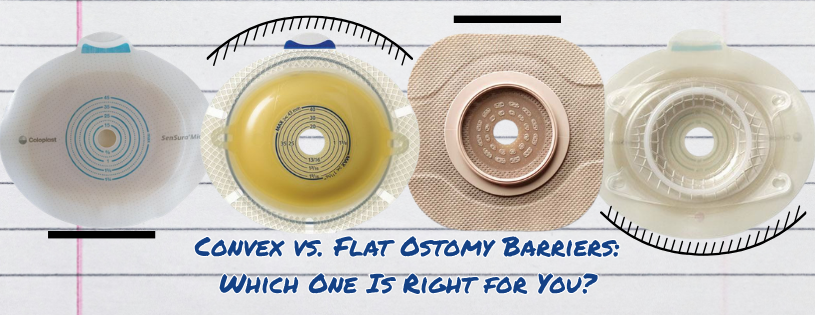
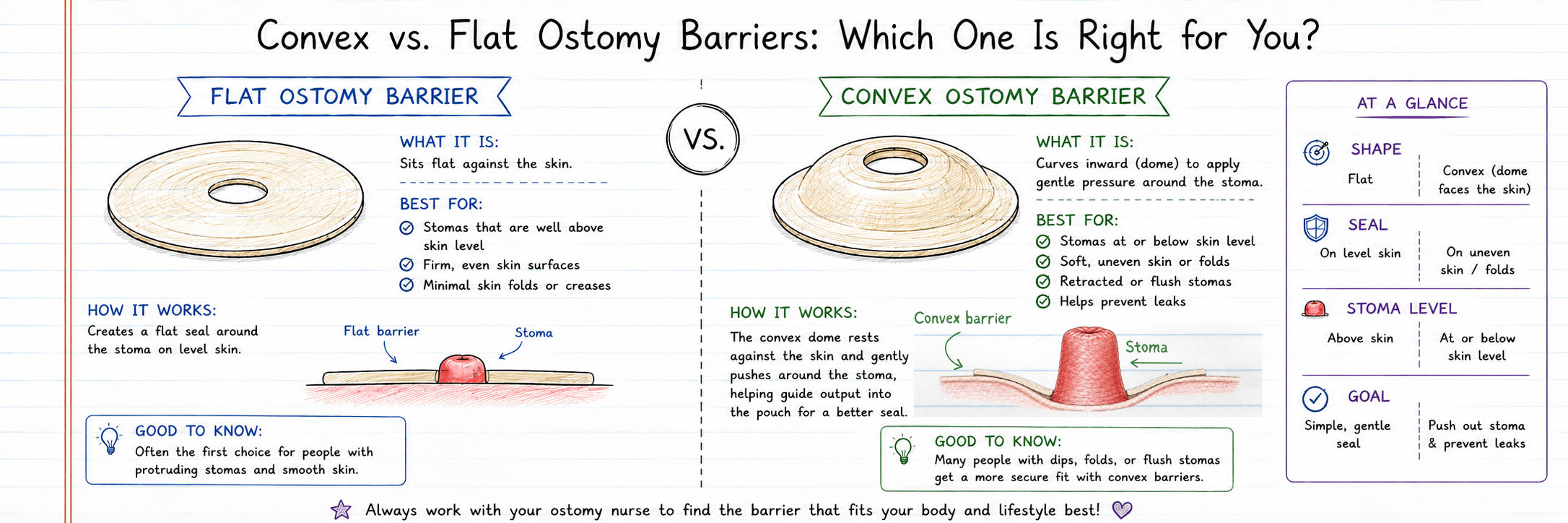
A flat ostomy barrier is exactly what it sounds like: an even, flat-surfaced, protective barrier for a stoma. Flat barriers are intended for even skin, but more importantly an even stoma. With cut-to-fit options there is some flexibility for the stoma shape, but if it is recessed or between skin folds, a flat barrier may not be the best choice. Customers can find flat barriers on one-piece, two-piece, pre-cut, or cut-to-fit ostomy bags.
What is a Convex Ostomy Barrier?
A convex ostomy barrier has an outward curve, putting pressure on the peristomal skin and pushing the stoma towards the inside of the ostomy bag. If your stoma isn’t even with the skin around it, flat barriers will have nothing to attach to. The convex style prevents leaks, increases wear time, and is more comfortable for those with a recessed stoma.
Convex vs. Flat Ostomy Barriers: What's the Difference?
When Is a Flat Ostomy Barrier the Best Choice?
- Stomas that protrude evenly and outward enough.
- When the abdomen is relatively flat.
- If the user has a consistent and predictable wear time.
When Is a Convex Ostomy Barrier Recommended?
- When the stoma is flushed or retracted within the skin.
- When skin folds surround the area of the stoma.
- If the abdomen is soft, and the barrier has trouble staying still.
- Ostomies with an output that’s higher than average.
Can a Convex Barrier Help Prevent Leaks?
The bowl shape of this skin barrier hugs the stoma and peristomal skin tighter than a normal flat barrier, creating gentle pressure that pushes the stoma outward and inside of your ostomy pouch. The combination of a tight seal and the stoma being inside the pouch can greatly reduce the chances of a leak, and increases comfort for the wearer.
Just because you are using the correct type of barrier does not mean there is a 0% chance of leaks. Users must verify that their barrier is the correct size, shape, brand, and material. If you are shopping for 2-piece systems, you need to check if your chosen barrier matches your bag. Consult your ostomy nurse if you are having trouble matching your ostomy pieces up.
Types of Convex Ostomy Barriers
Light (soft) convexity
This is a shallow outward curve meant for stomas that are barely beneath or even with the skin, and provides gentle pressure to make the stoma protrude.
Deep convexity
As the name suggests, this is a very deep curve and is designed for fully retracted stomas that are inside skin folds or below the skin. This barrier gives strong inward pressure to the stoma.
Flexible convexity
Flexible barriers are made to conform to all skin types and shapes, and stay still during movement, making them a good choice for active ostomates.
Firm convexity
These ostomy barriers do not bend or conform to the body, and are used to flatten skin folds. If the skin around the stoma is softer, firm barriers can get a stronger grip and push the stoma out.
Can You Switch from a Flat to a Convex Barrier?
There are a few reasons someone would switch the convexity of their ostomy barrier. After a surgery, the stoma will go through a period where it is adjusting and slightly changing shape. It isn't drastic, but even a small shift can completely change what you need. Many ostomates use cut-to-fit barriers, so they can customize the shape every time. Weight loss or gain can also affect your ostomy system. The stoma can retract with weight gain, and protrude with weight loss. Make sure to monitor your stoma and consult your ostomy nurse to match your barrier to your stoma.
Convex and Flat Ostomy Barriers by Brand
Hollister
Coloplast
ConvaTec
How to Choose the Right Ostomy Barrier
When it comes time to actually choose an ostomy barrier, it can be a daunting task. There are a lot of factors to consider and the slightest inaccuracy or change can throw off the entire system. It's important to monitor your stoma, peristomal skin, and stomal output to know what is best for you.
Stoma height - If your stoma is flush or below the skin level, a convex barrier would be ideal, as it would help grip and pull the stoma outwards into your ostomy bag.
Stoma location - Different ostomy procedures put stomas in different locations, and certain barriers won't work with every placement. If your stoma is in a spot where you have more skin creases or folds, it might be more challenging to use flat barriers.
Body contours - Body contours are a real obstacle for many ostomates. Using flexible barriers that bend with the skin can greatly reduce the stress and hassle of trying to attach a rigid barrier to a soft abdomen.
Skin condition - If you have sensitive skin or material sensitivities, it is very important that you carefully read through the type of barrier and bag you are getting, and double check that it won't cause issues for you.
Lifestyle - Many new ostomates think that after their surgery they won't be able to be active, but that isn't true. There are many barrier and bag types that are designed with exercise and extra movement in mind.
Output consistency - Output consistency is one of the most important things to consider when purchasing an ostomy bag. If you have solid or mostly formed output, the ease of a closed bag would work well for you. If you have liquid or loose output, emptying out a drainable bag can be an easy alternative.
After you have covered the core requirements, it comes down to personal preference. There are several different reasons people use different barriers or bags, and everyone is different. It's recommended to talk to your ostomy nurse or healthcare team to figure out what bag and what barrier will fit your specific needs and preferences.
FAQs on Convex Ostomy Barriers
Is a convex ostomy barrier better than a flat barrier?
The best type of barrier is the one that matches your stoma. If you have a recessed stoma or it is surrounded by uneven skin, a convex barrier may provide a better fit. If your stoma protrudes evenly and the surrounding skin is flat, a flat barrier may be a better choice.
Can convex barriers prevent leaks?
If a flat barrier does not fit your stoma correctly, a convex barrier may help improve the fit, prevent leaks, and reduce discomfort. If a flat barrier already fits your stoma properly, switching to a convex barrier may not provide any benefit and could cause more leaks.
Can a convex barrier hurt my stoma?
A convex barrier may cause pain or discomfort if it does not match your stoma or surrounding skin. If you are using a barrier and pouching system that matches your needs but are still experiencing pain, skin irritation, or general discomfort, speak with your healthcare team or ostomy nurse.
Are convex barriers available in one-piece and two-piece systems?
Yes. Convex and flat barriers are available in both one-piece and two-piece ostomy systems. They are also available in pre-cut and cut-to-fit options, along with other brand-specific features.
Can I switch from flat to convex on my own?
There are several situations where the type of barrier you need may change. After ostomy surgery, your stoma may change shape as it heals, which can affect the type of barrier needed. Weight gain or loss can also change the shape of the skin around your stoma. Stomas surrounded by uneven skin or skin folds may need a convex barrier, while stomas surrounded by flat skin may work better with a flat barrier. It is important to consult your ostomy nurse to determine the best fit for you.
Shop Flat and Convex Ostomy Barriers Online
Both flat and convex barriers have the same purpose. They protect your peristomal skin while directing your stoma and output into your ostomy bag. Flat barriers are designed for stomas that already stick out to a "normal" level, while convex barriers are intended to pull the stoma outwards if it is recessed or flush with the skin. There are several factors to consider, so it's important to do research and consult your medical team. Using Express Medical Supply's Auto-Ship Program lets you automatically order and have your supplies delivered straight to you on your schedule, making sure you never run out of the necessities. We ship directly from our warehouse to the consumer, and our human-ran customer service is happy to help you with any issues you run into.
Explore Our Newest Medical Guides & Insights
Compression Stockings and Socks Resource Center: FAQs and Related Reading
Compression Socks and Stockings Buying Guide: How to Choose the Right Size and Style
Knee-High vs. Thigh-High Compression Stockings: Which Is Right for You?
What Compression Level Do I Need? Understanding mmHg for Compression Socks

Best Compression Socks for Varicose Veins: How to Choose the Right Pair