Knee-High vs. Thigh-High Compression Stockings: Which Is Right for You?
Knee-High vs. Thigh-High Compression Stockings: Which Is Right for You?
What Are Knee-High Compression Socks?
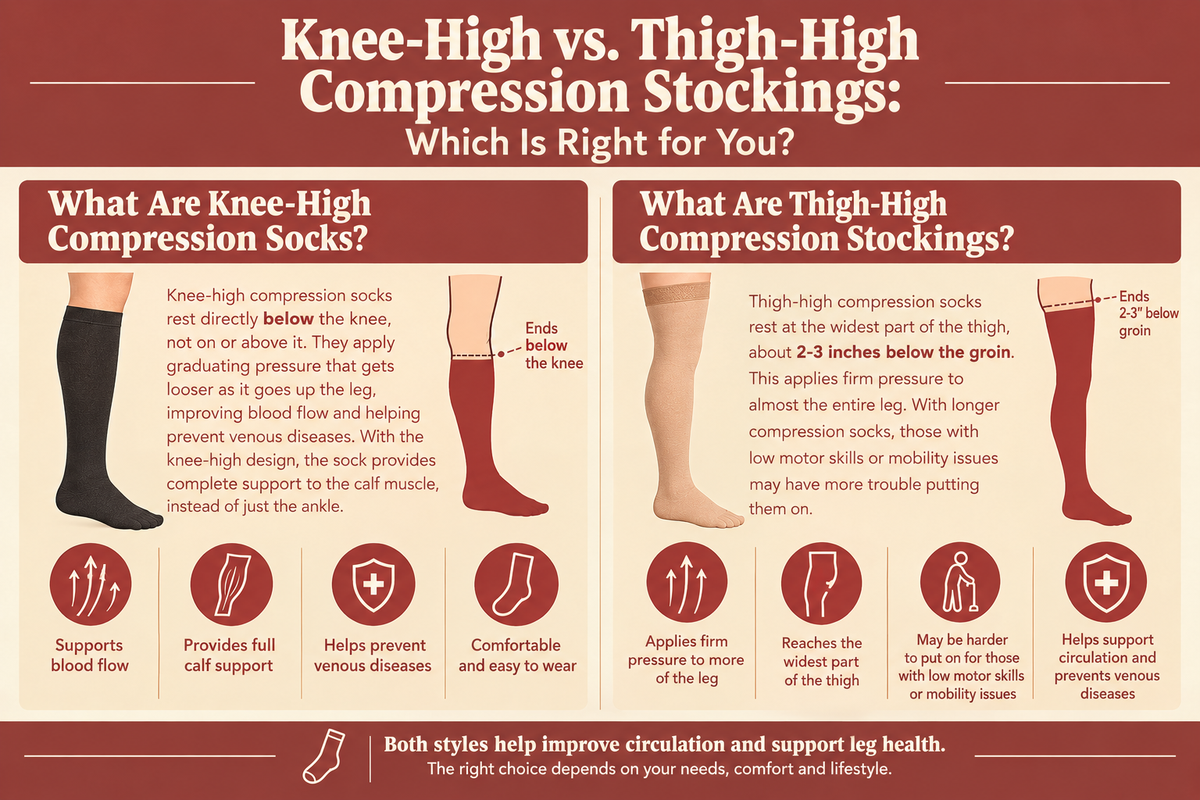
Knee-high compression socks rest directly below the knee, not on or above it. They apply graduating pressure that gets looser as it goes up the leg, improving blood flow and helping prevent venous diseases. With the knee-high design, the sock provides complete support to the calf muscle, instead of just the ankle.
What Are Thigh-High Compression Stockings?
Thigh-high compression socks rest at the widest part of the thigh, about 2-3 inches below the groin. This applies firm pressure to almost the entire leg. With longer compression socks, those with low motor skills or mobility issues may have more trouble putting them on.
When Should You Choose Knee-High Compression Socks?
Whether you’re debating switching from shorter socks to knee-high, or if you should use compression socks at all, there are several things to look out for. With choosing specifically knee-high socks, you get additional pressure that gives the sock more control over the blood flow, and can speed up muscle recovery.
You don’t need to have visible issues with your legs to use compression socks. As the most common length, many people use knee-highs to recover after a workout, or just prevent the possibility of future venous diseases.
With higher mmHg, knee-high socks can be used to treat more developed venous diseases. If your varicose veins, swelling, or other symptoms are reaching up the calf, using knee-socks will help.
When Should You Choose Thigh-High Compression Stockings?
Thigh-high stockings are usually used for more developed venous conditions, since they control blood flow of almost the entire leg. Switching from ankle-high or knee-high socks to thigh-highs shouldn’t be done without the advice of a medical professional, since it can cause more issues when used incorrectly/when you don’t need it.
If you have varicose veins reaching up your calf, but they haven’t reached above the knee, you can use thigh-high socks to prevent them from reaching further. Venous conditions like Deep Vein Thrombosis, Chronic Venous Insufficiency, or Post-Thrombatic Syndrome can all be treated with thigh-high stockings, relieving soreness and pain.
What Compression Level Should You Choose?
There is a wide range of compression levels: 8-15, 15-20, 20-30, 30-40, and 40+ mmHg. Each range has their own common uses, from basic pain relief to venous ulcers. If you use too little compression, you won’t notice any benefits and your conditions may continue to worsen. If you use compression that’s too high, you might cause more damage, such as blood clots or more swelling. It’s important to talk to your doctor and do your own research on what level will work best for you.
Tips for Wearing Knee-High and Thigh-High Compression
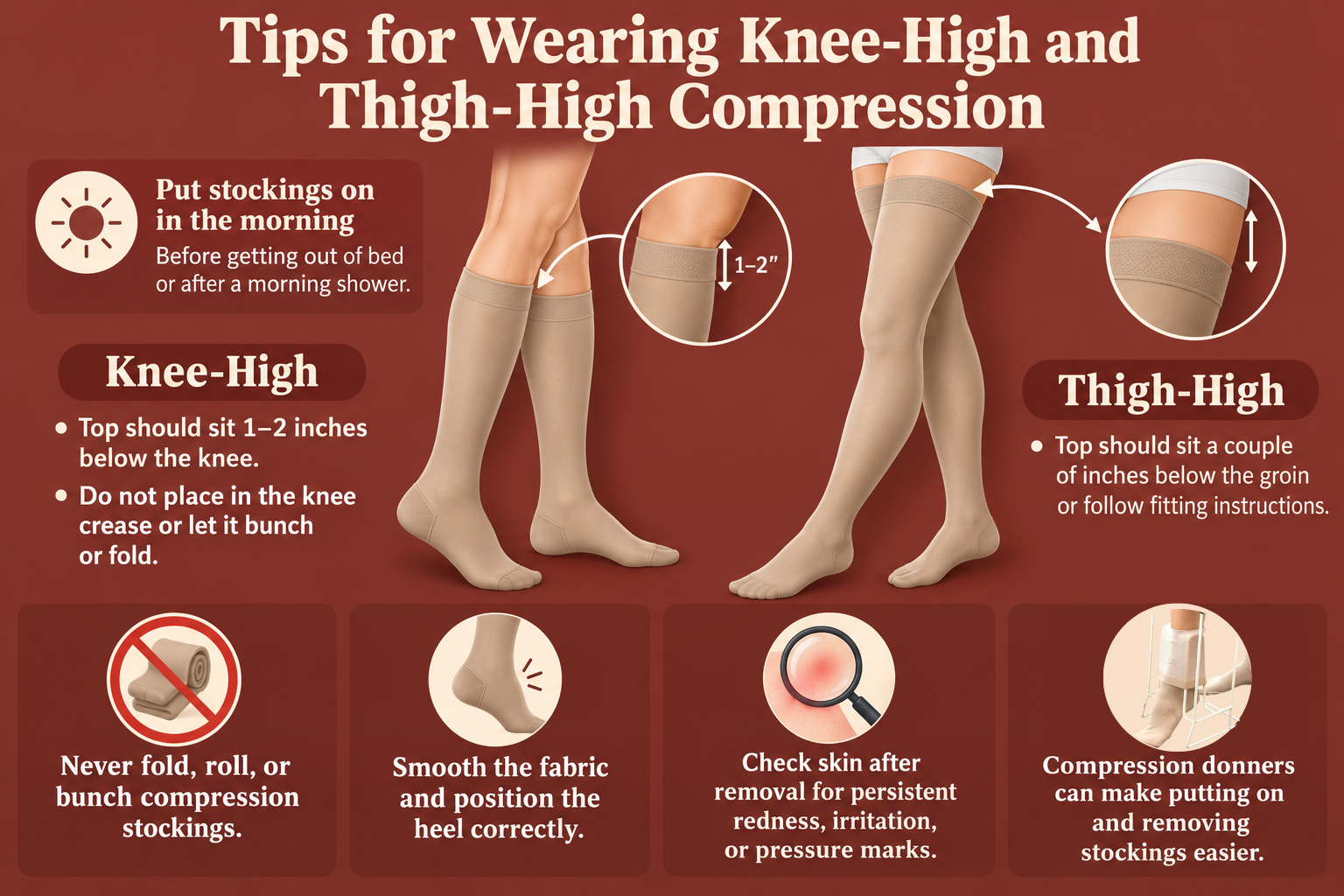
Once you know what level of compression and style you need, make sure you’re wearing your stockings correctly. Put them on in the morning, before getting out of bed or after drying off from a morning shower. This helps you get ahead of daily swelling and is also the best time to measure for compression stockings.
For knee-high stockings, position the top about 1-2 inches below the knee. The top should not sit in the knee crease, bunch up, or fold over, as this can create a tight band that causes discomfort or restricts circulation. For thigh-high stockings, position the top a couple of inches below the groin or according to the manufacturer's fitting instructions.
Never fold, roll, or bunch up compression stockings, as this can create areas of excessive pressure. Make sure the fabric is smooth and the heel is properly positioned. Check your skin after removing your stockings for persistent redness, irritation, or pressure marks.
If you have trouble putting on or removing compression stockings, compression donners can make the process easier while reducing physical strain and the range of motion required.
Which Is Better for Varicose Veins?
What sock is best for varicose veins depends entirely on what stage your veins are in. Some will wear longer socks before they have any symptoms, purely for the preventative benefits. If you are wearing ankle socks and notice your varicose veins slowly reaching farther up the leg, you might want to switch to knee-high or thigh-high stockings. To learn more about what sock is best for varicose veins, read our in-depth blog about them.
Which Is Better for Leg Swelling?
It’s important to remember that compression stockings do not cure venous deficiencies, but they do relieve symptoms. The length of the sock doesn’t immediately mean more benefits, as it depends on where the swelling or pain is.
If you have swelling in your ankle, ankle-high compression socks will likely be enough to manage your symptoms. The higher your swelling is on the leg, the taller the sock should be. You can also wear longer socks as a preventative measure, stopping symptoms from ever reaching up the leg.
How Compression Stocking Length Affects Fit
There are a few things to keep in mind for each length of compression sock. The heel and toe alignment needs to stay consistent between lengths, to avoid twisting the skin or applying too much pressure.
If your socks are shorter, they can roll down and apply too much pressure to the ankle area. This will cut off blood flow and lead to more swelling and pain. If your socks are longer, they can bunch up behind your knee, causing great discomfort and possible blood clots. Picking the wrong length, or not wearing them correctly, can reduce benefits and cause more damage.
How to Measure for Compression Socks and Stockings
Remember to measure first thing in the morning, when your legs aren’t swollen at all. You’ll need a flexible tape measure, or a piece of string and a regular tape measure. You’ll also need a flat seat and floor.
Sit with your feet flat on the floor, keeping your knee bent at a 90 degree angle. Wrap the tape measure or string around the narrowest part of the ankle. Make sure it’s snug, but not digging into the skin. If you’re using a string, mark the point where it reaches around your leg, and measure it with a normal tape measure. Do the same at the widest part of your calf.
If you are wearing knee-high socks, you will need to measure calf length. With your leg still at a 90 degree angle, start the tape measure or string at the floor, right behind your ankle. Run the tape up the leg to about 1-2 inches below the knee. If you have difficulty visualizing that measurement, run the tap to the center of the back of the knee, and subtract 1-2 inches.
For measuring thigh circumference and height, stand with your feet flat and at shoulder-width. Measure around the widest part of the thigh, where your thigh-high sock will sit. Measure from the floor to the same height, but on the inside of the leg, for height.
How to Keep Thigh-High Compression Stockings From Rolling Down
The easiest way of avoiding rolling socks is to wear the right size, right length, and wear it the correct way. You should also keep the skin under the sock dry and clean, to avoid trapped moisture or damage to your sock. There are certain socks that come with a silicone grip band that uses friction to keep the sock in place. To make sure you’re putting on the sock correctly, you can use compression stocking donners, which reduces the physical strain and helps align the sock perfectly.
When Should You Ask a Healthcare Provider About Compression Stockings?
Remember, you don’t need visible symptoms to wear compression socks. They can be used entirely as a preventative measure, or to help basic muscle recovery after a long shift at work or exercise.
If you have a history of venous diseases or blood clots in your family, or start noticing symptoms of them, or are starting a new job where you’ll be sitting or standing for long periods, talk to your doctor about compression stockings.
Shop Knee-High and Thigh-High Compression Stockings
Knee-high and thigh-high compression stockings provide the same benefits, but target different parts of the leg. Choosing your length depends on where and what your symptoms are, and choosing the style depends on personal preference and doctor recommendations. Express Medical Supply offers a wide range of compression socks, and compression sock accessories to make the experience easier.
Explore Our Newest Medical Guides & Insights
Compression Stockings and Socks Resource Center: FAQs and Related Reading
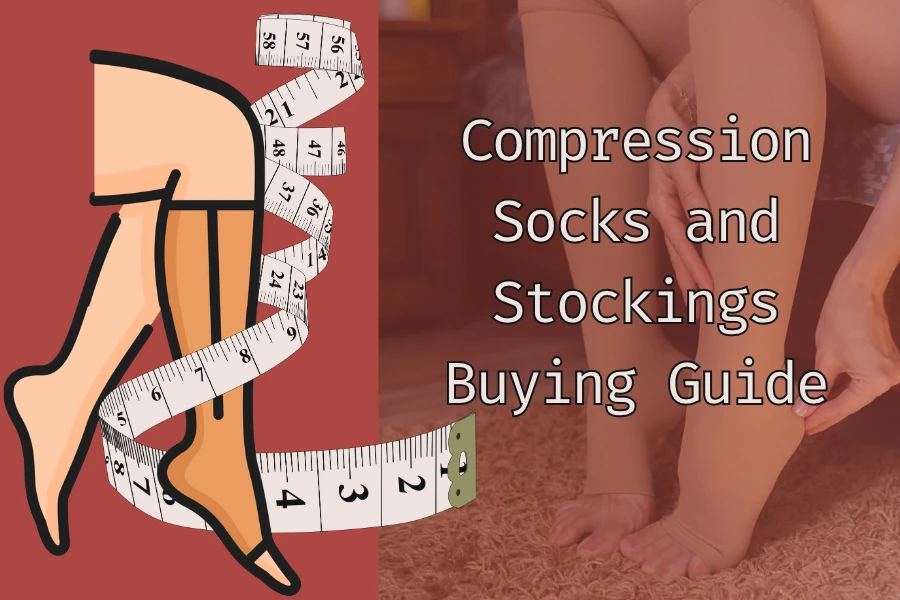
Compression Socks and Stockings Buying Guide: How to Choose the Right Size and Style
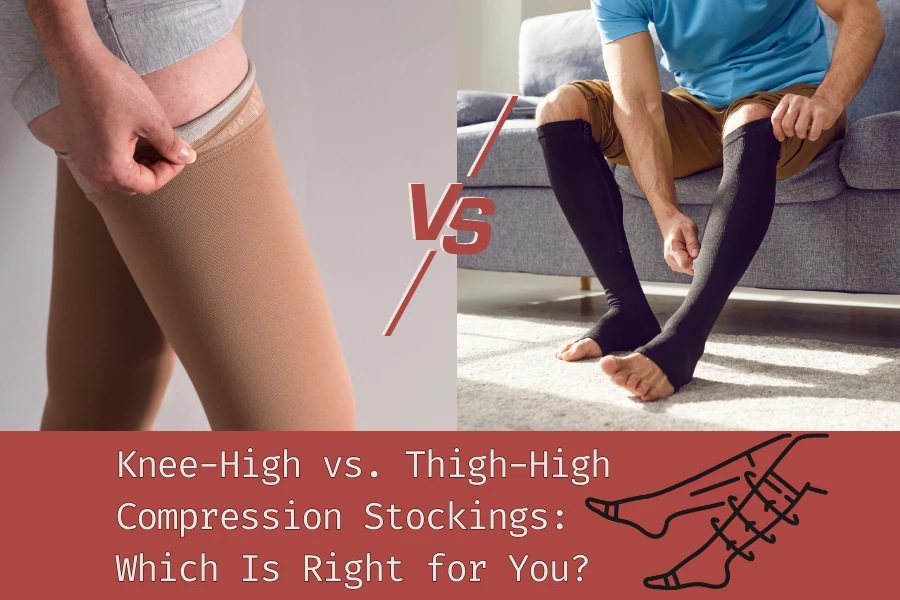
Knee-High vs. Thigh-High Compression Stockings: Which Is Right for You?
What Compression Level Do I Need? Understanding mmHg for Compression Socks
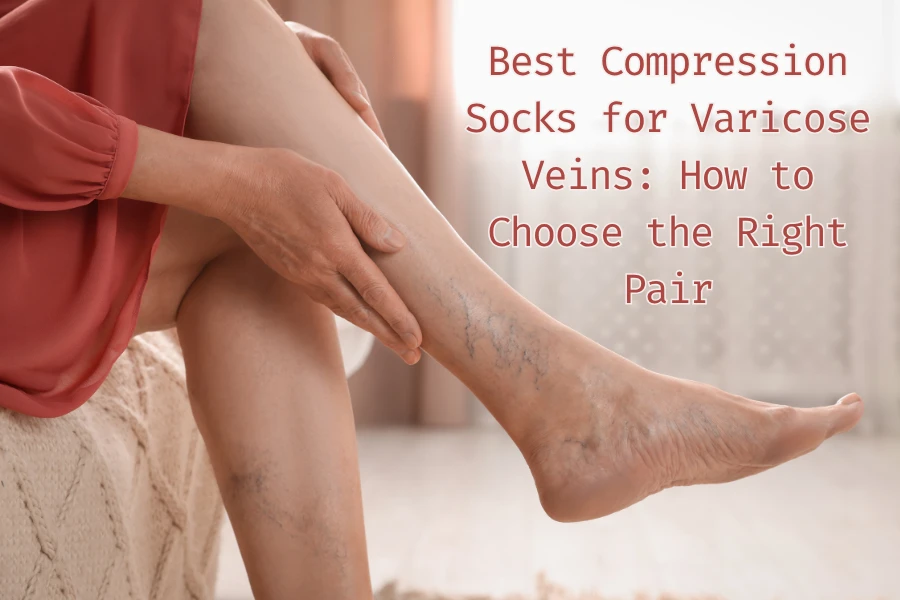
Best Compression Socks for Varicose Veins: How to Choose the Right Pair