Best Compression Socks for Varicose Veins: How to Choose the Right Pair
Best Compression Socks for Varicose Veins: How to Choose the Right Pair
What are Varicose Veins?
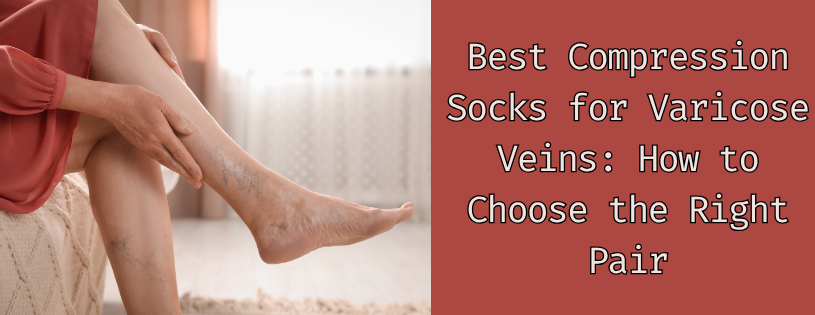
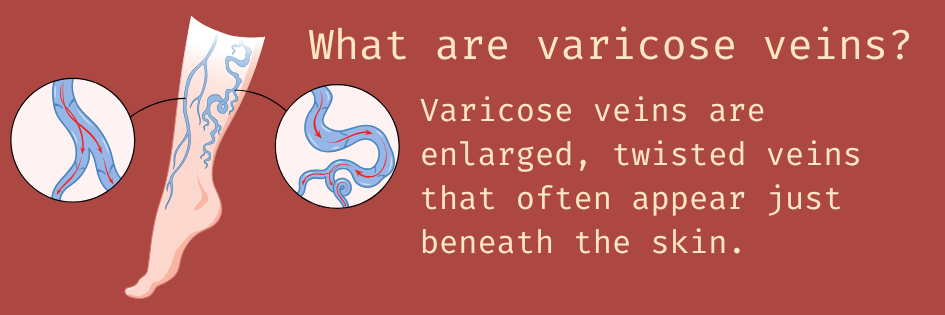
Varicose veins are bulging or twisted blood vessels, normally on the feet or legs. They appear just under the skin, and have a dark purple, red, or blue color.
Within leg and feet veins are valves that help push blood back up towards your heart. Over time, they weaken and break down. This leads to blood pooling within the veins, making them protrude. Most cases of varicose veins only cause minor discomfort, if any at all. Severe cases can cause burning and throbbing pain.
Varicose veins are caused by long-term wear and tear, so they most often appear with old age. Additional pressure put on the veins can cause them earlier, like jobs that have you on your feet for long periods. Pregnancy can also add to the vein stress, because of extra pressure on the feet. Just because you have experienced one of these causing factors and don’t have varicose veins doesn’t mean you’ll never have them. Varicose veins can take years to develop, even if you stop putting pressure on the veins.
How Do Compression Socks Help Varicose Veins?
Compression socks add graduated pressure to the feet, ankles, and legs, depending on the type of sock. This helps push the blood back up towards your heart, and stops blood from pooling in the feet or lower legs. This reduces swelling and helps prevent varicose veins from appearing.
Compression socks do not cure varicose veins. They can reduce the aching and pain from them, as well as stopping new ones, but they won’t make old ones go away. If you want to lower your risk of getting any varicose veins at all, it’s recommended to wear them before they happen.
When Should You Talk to Your Doctor About Compression Socks?
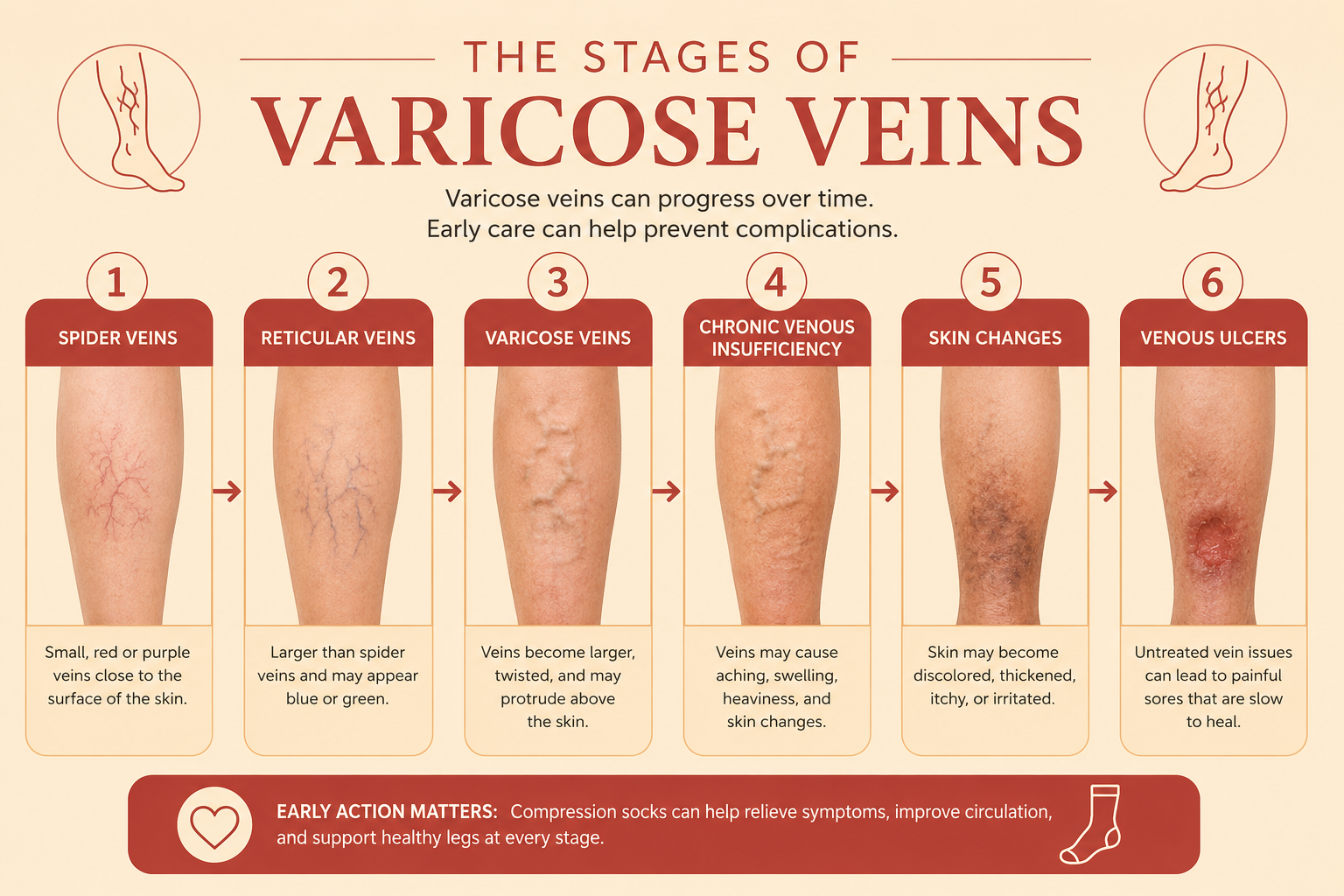
The earliest signs of varicose veins include:
- Dull aching
- Legs feeling extra tired at the end of the day
- Mild ankle swelling
If you experience these early warning signs, you should talk to your doctor about compression socks or other treatments. The only way to never have varicose veins is taking action long before they usually pop up. If you are on your feet for long periods, or pregnant, or in any situation that adds extra pressure on your feet or legs, you should wear compression socks. If you take preventative measures, your circulation will stay healthy.
What Compression Level Is Best for Varicose Veins?
The level of compression needed for varicose veins depends entirely on how severe the veins are.
15-20mmHg
If you don’t have any varicose veins, but want to prevent them, using 15-20mmHg socks when you’re on your feet for long periods will help take stress off the veins. This level of compression is also used when mild symptoms start showing, to stop new veins from showing.
20-30mmHg
This level of compression is the lowest that is considered “medical grade”. 20mmHg and higher is for varicose veins that are already bulging, and causing consistent aching or pain. Talk to your doctor before buying high level compression socks, as they could cause more harm than good if you wear them too early.
30-40mmHg
These socks are for the most severe cases of varicose veins, or other severe venous diseases. They are often used during recovery after a surgery, like a hip or knee replacement. If you feel extreme soreness, pain, and aching, talk to your doctor about medical-grade compression.
What Type of Compression Sock Is Best for Varicose Veins?
The type of compression sock is different from its compression level. There are a few versions of the socks, and it depends on the location of your varicose veins.
Knee-High Socks - If your varicose veins and aching feeling are on your calf and ankle, which is common for people experiencing the earliest symptoms.
Thigh-High Socks - If you have pronounced veins reaching your thigh, usually seen with more developed varicose veins.
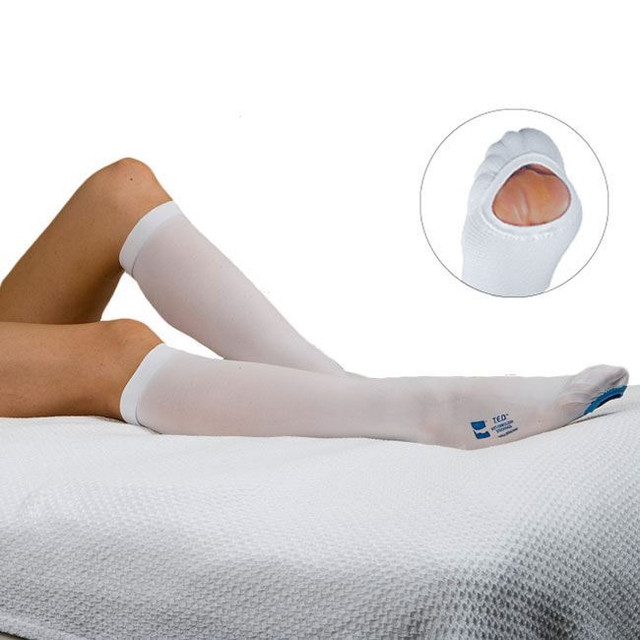
Open-Toe vs. Closed-Toe - Open-toed socks make it easier to find the right size, since you don’t have to account for the toes. Closed-toed socks feel and look much closer to a regular sock, which some people prefer.
Wide-Calf Socks - These wide variations are meant for people who feel uncomfortable in standard-sized socks, which can cause varicose veins to worsen.
When Should You Wear Compression Socks for Varicose Veins?
Compression socks can be worn throughout the whole day, but it is important to put them on in the morning. Right when you wake up is when your legs are the least swollen. Take this opportunity to put on your socks, greatly reducing the amount of swelling in the day.
When you get into bed for the night, take the compression socks off. There is little to no pressure put on your legs at night, and wearing them when they’re not needed can actually cause further damage.
When showering, take the socks off to properly clean the leg and to avoid trapped moisture underneath or within the sock.
15–20 vs. 20–30 mmHg Compression Socks
The switch from 15-20 to 20-30mmHg compression socks is an important one, since 20-30 is considered medical grade. Most people who are wearing 15-20mmHg are experiencing very mild symptoms of varicose veins, with mild aching or discomfort. If this starts to become worse, or your normal socks aren’t helping as much as usual, it might be time to switch.
Easy ways to tell you need higher compression:
- You notice more swelling in your ankles, feet, or legs.
- Your varicose veins become more visible, or painful.
- Using your normal compression sock doesn’t give the same relief it used to.
Knee-High vs. Thigh-High Compression Stockings
As varicose veins develop, they may reach higher and higher on the leg. For more developed or severe cases, they can reach up into the thigh. “Reaching” doesn’t always mean a visible vein. If you are feeling discomfort, soreness, or pain in your thighs, but your veins are only visible much lower, thigh-high or knee-high compression socks might help.


How to Measure for Compression Socks
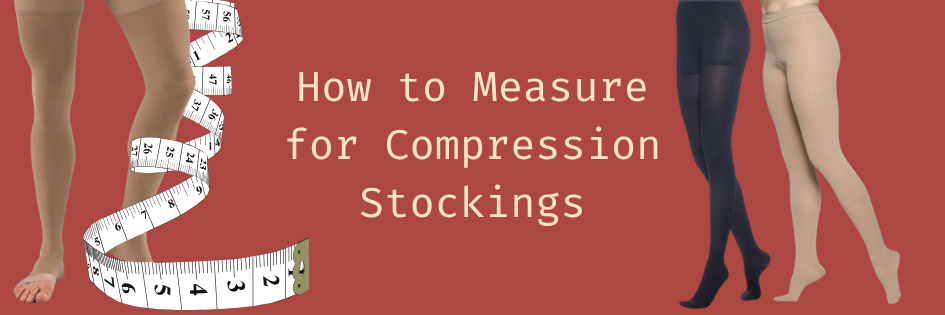
It’s important to measure your legs in the morning, when they are the least swollen. Use a flexible measuring tape. If you don’t have one, use a string, wrap it around your leg, and measure the length with a ruler or straight tape measure. No matter the level of compression you plan to buy, the measuring process doesn’t change. For most socks, you will need to know your shoe size as well.
Measuring the Ankle:
- Sit in a chair and put your feet flat on the floor, making your leg at a 90 degree angle.
- Find the narrowest part of your ankle.
- Wrap the measuring tape/string around it, making sure it lies flat against your skin, but isn’t too tight.
Measuring the Calf:
- Stand up with your legs straight.
- Locate the widest part of your calf.
- Wrap the tape or string around this point, still keeping it flat.
Measuring for knee-high socks:
- If you are buying taller socks, you will need to know your leg length.
- Stand straight, without your knees locked.
- Measure from the floor to behind your knee, where your leg bends.
Tips for Putting On Compression Socks
Compression socks need to be put on at the beginning of the day, before you get out of bed. If you shower in the morning, put your socks on directly after you dry your legs. When you get into bed for the night, take the socks off.
Your legs don’t have pressure being put on them while laying down, so wearing compression socks might cause more damage. Choosing the wrong level of compression can also cause damage. Speak to your doctor before buying compression stockings and ask what level is right for you.
If you have low motor skills or more severe arthritis, you might find it challenging to pull the sock up. Using tools like the Jobst Stocking Donner can make it much easier.
How Long Should You Wear Compression Socks?
Compression socks should be worn for about 8-12 hours, generally from when you get out of bed to when you get back into bed for the night. If you have higher compression socks, they should only be worn for shorter periods, as directed by your doctor or medical team.
Everyone is different, and some people might find that wearing low compression socks for too long can still cause discomfort. Talk to your doctor about how much pressure you need and how long your wear times are.
Shop Compression Socks and Stockings for Varicose Veins
Compression stockings apply graduated pressure to the leg to improve blood flow, which helps keep your veins healthy and prevent varicose veins. The earliest symptoms include slight discomfort in the ankles at the end of the day, swelling in the feet, or your veins being more visible than usual. If you are on your feet a lot, pregnant, or in another situation that puts pressure on your legs, compression stockings might be the right choice for you.
Explore Our Newest Medical Guides & Insights
Compression Stockings and Socks Resource Center: FAQs and Related Reading
Compression Socks and Stockings Buying Guide: How to Choose the Right Size and Style
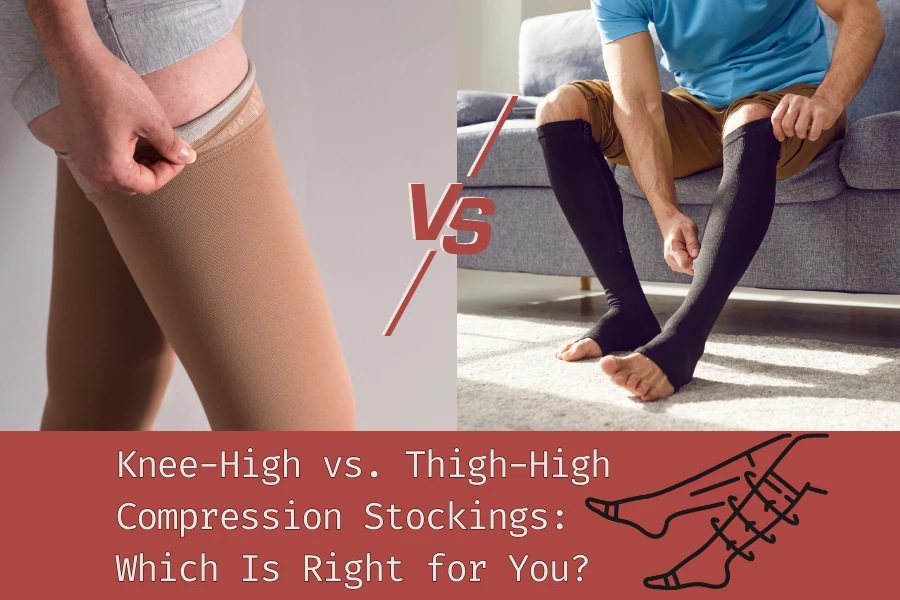
Knee-High vs. Thigh-High Compression Stockings: Which Is Right for You?
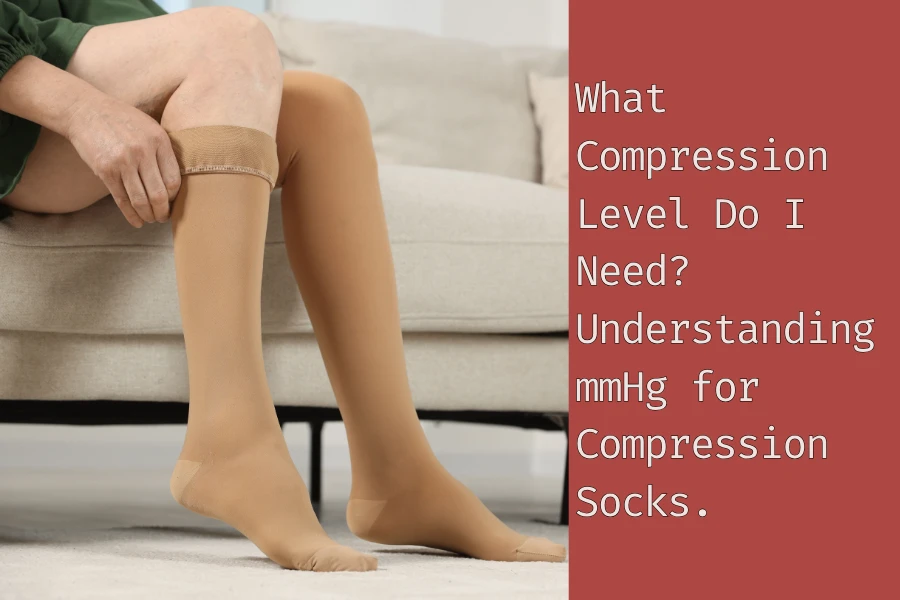
What Compression Level Do I Need? Understanding mmHg for Compression Socks
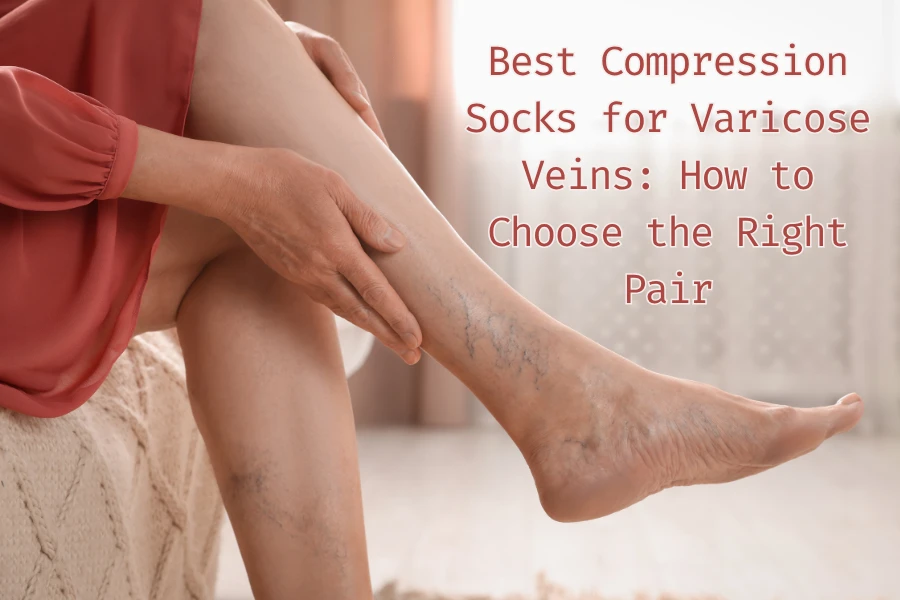
Best Compression Socks for Varicose Veins: How to Choose the Right Pair