Insulin Syringe Sizes: How to Choose the Right Syringe for Your Needs
Insulin Syringe Sizes: How to Choose the Right Syringe for Your Needs
Understanding Insulin Syringes and How They Work
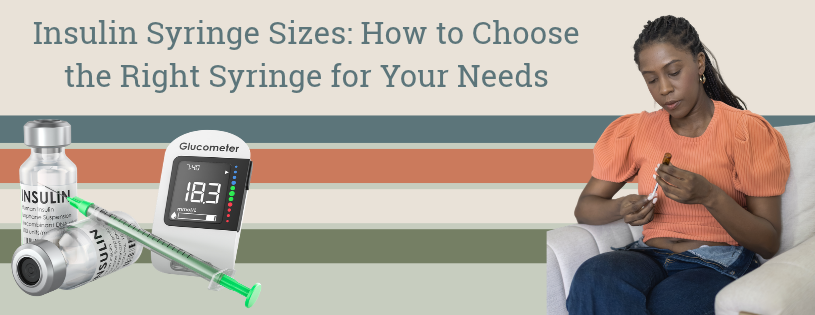
Insulin syringes carry your prescribed dose of insulin, and are injected into the layer of fat just below the skin. Those with types of diabetes that cause their body to not produce or manage insulin correctly use insulin syringes to balance their blood sugar, most commonly before eating.
Some diabetics use syringes because it allows them to mix different kinds of insulin, but this should never be done without specific advice from your doctor. If you have low motor skills, or shaky hands, using insulin syringes might be difficult for you, as it involves very specific and manual measuring.
Insulin Syringes vs. Insulin Pens
A lot of diabetics use insulin pens, which also deliver insulin, but are not the same thing. Pens contain a cartridge of insulin, and a single-use needle that gets replaced after each injection. When using insulin syringes, the user draws insulin from a vial, and manually injects it into their stomach, thighs, upper arms, or buttocks.
Insulin pens are much simpler to use, but much more expensive than insulin needles. Many insurance policies will cover or offer reimbursement for insulin pens and syringes, but it is very important to contact your provider and find out specifics.
What Are the Different Insulin Syringe Sizes?
There are three common sizes for insulin syringes: 0.3 mL (30-unit), 0.5 mL (50-unit), and 1 mL (100-unit). The mL refers to the maximum capacity of the syringe, in milliliters. The units refer to the units of insulin within the dose.
| Syringe Size | Units of Insulin | Typical Use |
|---|---|---|
| 0.3 mL | 30 units |
|
| 0.5 mL | 50 units |
|
| 1.0 mL | 100 units |
|
How to Choose the Right Insulin Syringe
Many factors affect what insulin syringe you should use. Most important is your specific prescribed dose. Make sure to talk to your doctor and only use the type, amount, and delivery system that matches your prescription.
The barrel capacity of your insulin pen or syringe should be your exact single dose, in the smallest possible barrel. Needle gauge also matters, as thinner needles (higher gauges means thinner, not thicker) cause less pain during injection, while thicker needles deliver the insulin faster. The choice between insulin syringes can also come from vision issues. 0.3 mL syringes have markings that are farther apart and easier to read.
Always consult your doctor before using an insulin needle or pen and make sure it is right for you. If you’re using insulin syringes, it is also very important that you know how to inject it. Pushing the needle in too far can inject the insulin into the muscle instead of the fat, which leads to your body absorbing it incorrectly.
Insulin Syringe Needle Gauge and Length Explained
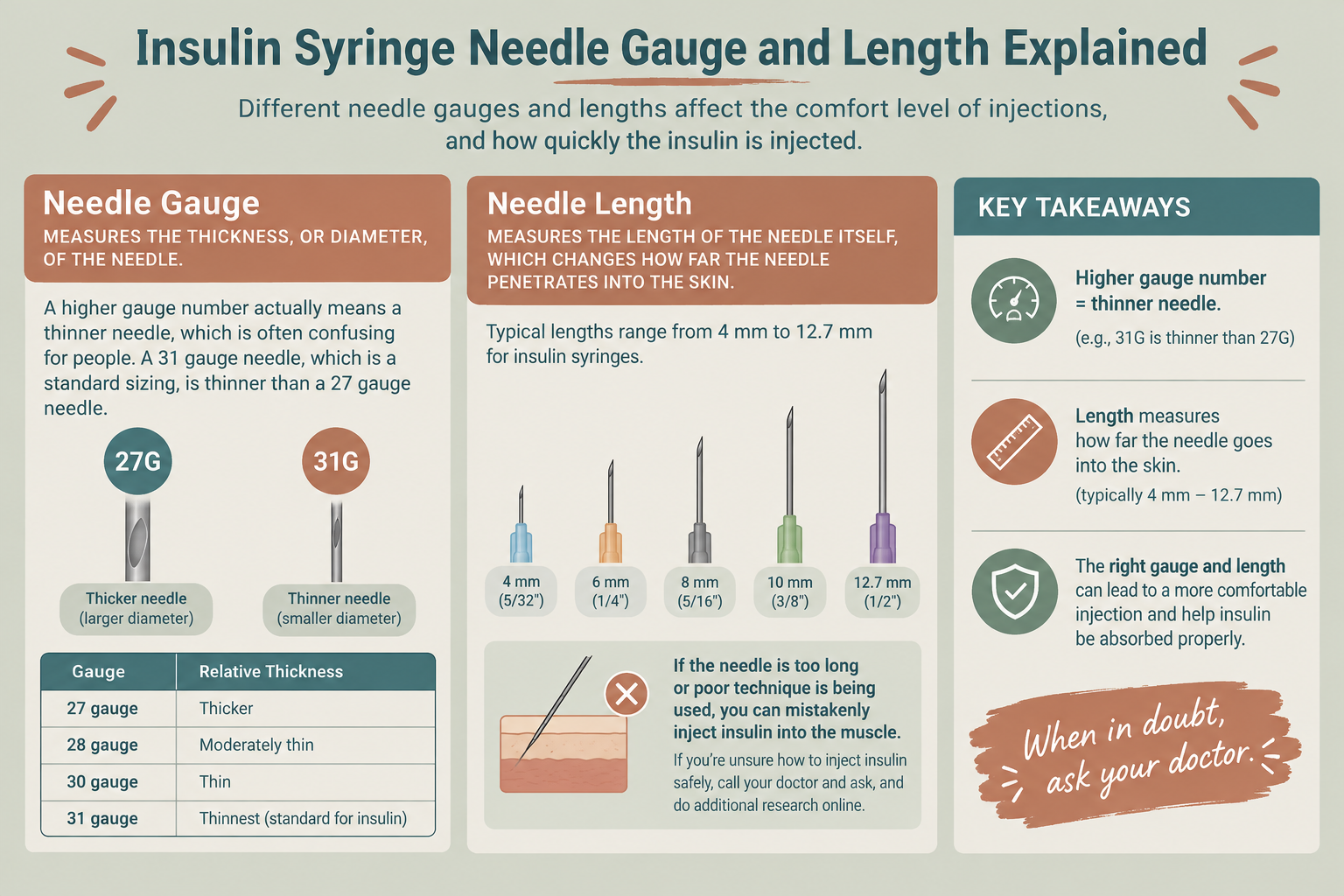
Different needle gauges and lengths affect the comfort level of injections, and how quickly the insulin is injected.
Needle gauge measures the thickness, or diameter, of the needle. A higher gauge number actually means a thinner needle, which is often confusing for people. A 31 gauge needle, which is a standard sizing, is thinner than a 27 gauge needle.
Needle length simply measures the length of the needle itself, which changes how far the needle penetrates into the skin. Typical lengths range from 4 mm to 12.7 mm for insulin syringes. If the needle is too long or poor technique is being used, you can mistakenly inject insulin into the muscle. If you’re unsure how to inject insulin safely, call your doctor and ask, and do additional research online.
U-100 Insulin Syringes and Insulin Concentrations
In “U-100”, the U stands for the units of insulin within the dose. The 100 states that in every 1 milliliter of liquid, there are 100 units of insulin. The mL measurement of a syringe refers to the maximum amount of liquid for that syringe.
It's crucial that your insulin prescription matches your insulin syringe. The type of syringe you use will have markings that are specific to your dosage. Mismatching, or taking the wrong amount, can lead to overdosing or underdosing, causing serious problems.
Tips for Using and Disposing of Insulin Syringes Safely
When filling your syringe with insulin, injecting it, or disposing of it afterwards, you must follow the specific instructions of the product you are using. Read the packaging, product page, and markings of your syringe to know how to use it.
If you use insulin syringes, you also have to store them correctly. Make sure to keep them in their sealed packaging until you need to use them. Store them in a clean, dry location that's easily accessible. Try to keep a hefty supply to prevent running out. Insulin syringes are single-use, which means you’ll go through a lot of them quickly.
When you dispose of your insulin syringes, you should use a dedicated sharps container. If you don’t have one, use a container that is made with thick, heavy-duty plastic. Throwing needles in regular trash can cut open the bag, and leaving them out somewhere will spread germs.
Where to Buy Insulin Syringes Online
Express Medical Supply offers a range of insulin syringes of different lengths and gauges, as well as many other products for diabetics, such as lancets, socks, and glucose monitors. Before purchasing, talk to your doctor and verify syringe capacity, needle specifications, and the type of insulin you need. You can make sure you keep your supply stocked using our Auto-Ship program to deliver your supplies on your schedule, to avoid running out at a bad time.
Frequently Asked Questions About Insulin Syringes
What size insulin syringe do I need?
The type of insulin and size of the syringe all depend on your specific insulin prescription. The three common sizes are 0.3, 0.5, and 1.0 mL syringes, which refer to the units of insulin within the dose. If you are unsure what kind of insulin or what size syringe you need, ask your doctor what works for you.
What is the difference between a 30-unit, 50-unit, and 100-unit insulin syringe?
The difference between the measurements is the volume and total capacity of the insulin syringe. A 30-unit, or 0.3 mL syringe, carries a maximum of 30 units of insulin, a 50-unit carries a maximum of 50 units, and so on. The number of units you need depends on your specific prescription.
What does U-100 mean on an insulin syringe?
A U-100 marking on an insulin syringe means that syringe carries a maximum of 100 units of insulin per dose. For the insulin itself, it means it contains 100 units of insulin per 1 milliliter of fluid.
What insulin syringe needle gauge is best?
A 31-gauge needle is generally considered to be the most comfortable sizing for average doses. Larger gauges, like a 31G, are thinner than lower gauges. This greatly reduces the sting of the needle, although it does take longer to inject the dose.
Are shorter insulin needles less painful?
Yes, shorter needles are generally considered to be less painful and are preferable to longer needles for most situations. Using a needle that is too long can increase the risk of injecting your insulin into your muscle, not your fat. Using a needle that is shorter can make injections easier, as well as ease some nerves for people who dislike needles.
Can you reuse an insulin syringe?
No. Once you use an insulin syringe, you should throw it away. Reusing syringes can lead to tearing of the skin, damaging of the tissue, infection, or clogging of dried insulin within the needle. Make sure to buy your syringes before you need them to avoid running out completely.
Where can you buy insulin syringes online?
Insulin syringes can be found on many sites, including Express Medical Supply. We offer a normal range of insulin syringes, as well as many other diabetic supplies. Using our Auto-Ship program can help guarantee you don’t run out of your supplies unprepared.
Explore Our Newest Medical Guides & Insights
Insulin Syringe Sizes: How to Choose the Right Syringe for Your Needs

Compression Stockings and Socks Resource Center: FAQs and Related Reading

Compression Socks and Stockings Buying Guide: How to Choose the Right Size and Style

Knee-High vs. Thigh-High Compression Stockings: Which Is Right for You?

What Compression Level Do I Need? Understanding mmHg for Compression Socks