Compression Socks and Stockings Buying Guide: How to Choose the Right Size and Style
Compression Socks and Stockings Buying Guide: How to Choose the Right Size and Style
How to Choose the Right Compression Socks or Stockings
Whether you are completely new to compression socks, or debating switching to a different type, there are a lot of factors to consider. The most important things to pay attention to are the measurements, compression level, and style of sock. These three are the basic building blocks of any compression setup. Other factors are more personal preference/case specific, like choosing between open toe or closed toe, length of your sock, and your ability to put them on. If you’re having trouble figuring out the right sock for you, read through this article and consult your medical team.
How to Choose the Right Compression Level
There’s multiple compression levels that all have their own common uses.
8-15 - Workout recovery, long periods of sitting/standing
15-20 - Road trips, flights, pregnancy support
20-30 (Medical Grade) - Visible symptoms of venous diseases, longer road trips or flights
30-40+ - Developed venous diseases, surgery recovery, extreme support
Choosing the Right Compression Sock or Stocking Length
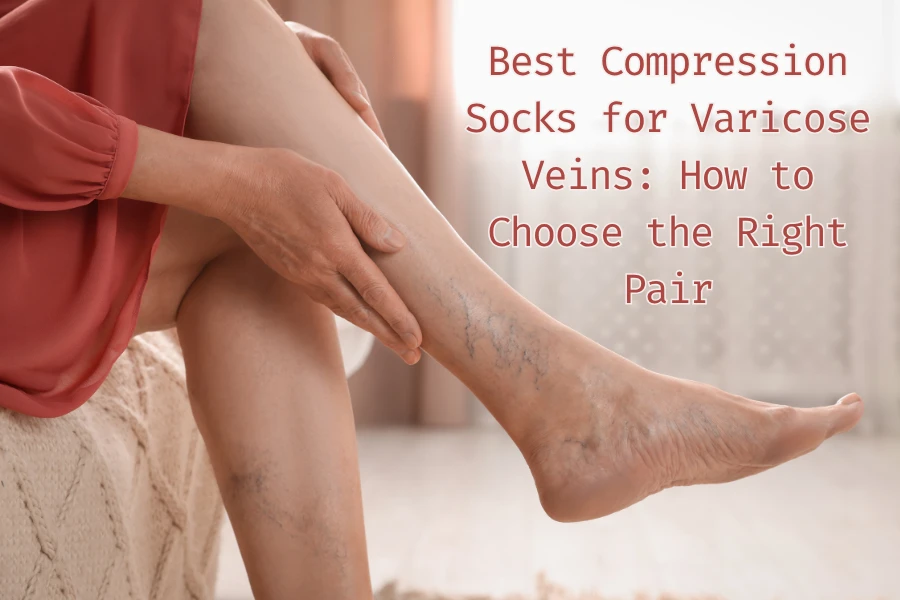
Having a longer compression sock doesn’t immediately mean you’ll see more benefits or have less pain. The choice between a taller or shorter compression sock depends on where your pain and visible symptoms are. If you have varicose veins, the sock length that covers them fully will work best. Make sure to examine your legs to look for visible symptoms, and focus on where you are feeling discomfort or pain.
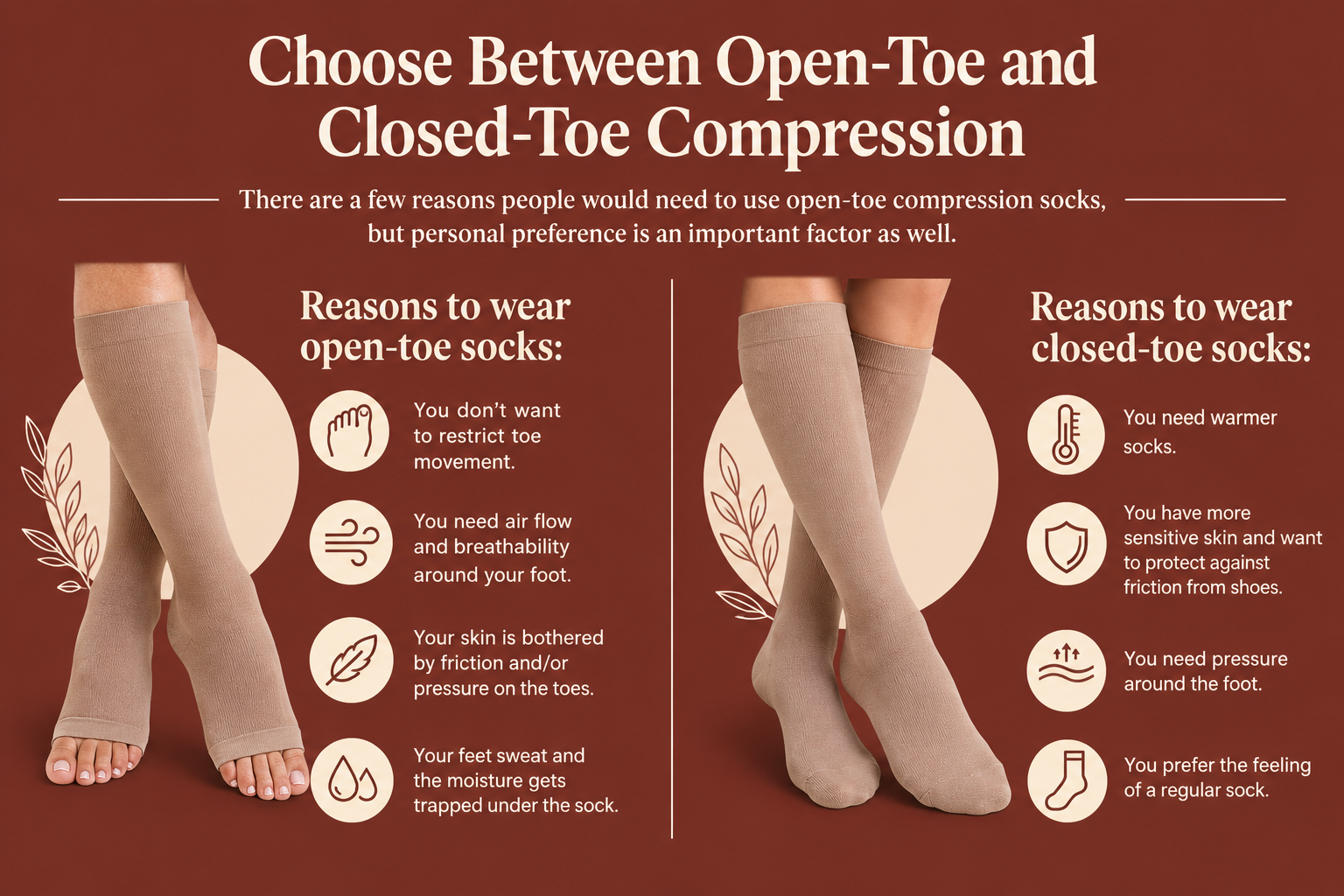
Choose Between Open-Toe and Closed-Toe Compression
There are a few reasons people would need to use open-toe compression socks, but personal preference is an important factor as well.
Reasons to wear open-toe socks:
- You don’t want to restrict toe movement
- You need air flow and breathability around your foot
- Your skin is bothered by friction and/or pressure on the toes
- Your feet sweat and the moisture gets trapped under the sock
Reasons to wear closed-toe socks:
- You need warmer socks
- You have more sensitive skin and want to protect against friction from shoes
- You need pressure around the foot
- You prefer the feeling of a regular sock
How to Measure for Compression Socks and Stockings
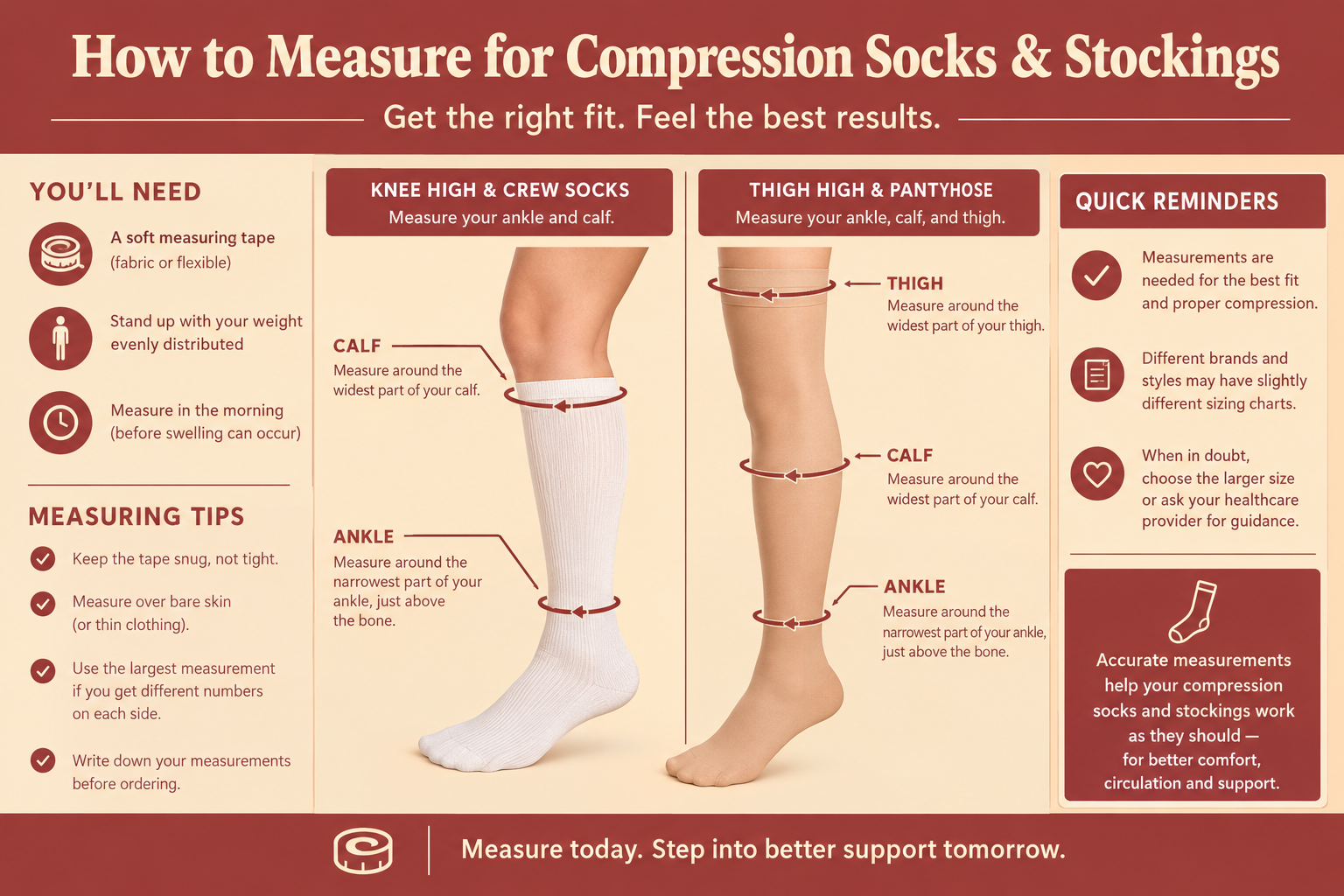
To measure for compression socks, you will need a chair, a flat floor, and a flexible measuring tape. If you don’t have a flexible measuring tape, use a piece of string: wrap the string around the desired location, mark/keep your finger at the point where it overlaps, and measure it with a normal tape measure or ruler.
Measure Your Ankle - Sit in a flat chair, with your legs at a 90 degree angle. Make sure your foot is completely even with the floor. Find the narrowest part of your ankle, and wrap the measuring tape/string around it. It should be flat on the skin, but not so tight that it’s digging in. Write this measurement down.
Measure Your Calf - Stand up with your feet shoulder width apart, and pointing straight ahead. Locate the widest part of your calf, and wrap the tape or string around it. Make sure to keep the tape/string flat and not angled around the calf. Write this measurement down.
Measure Your Thigh - While standing straight with your feet pointing forward, locate the widest part of your thigh. This is normally 1-2 inches below the groin. In the same way you did the other measurements, wrap your tape/string around this point, keeping it flat and straight. Write this measurement down.
Measure Your Leg Length - Stand up straight with your feet shoulder width apart, pointing forward. Make sure your legs are straight, but your knees aren’t locked. Start the tape measure or string at the base of your heel, running it up the back of your leg. Bring it to the top of the thigh, and write this measurement down.
When Should You Take Your Measurements?
Measurements need to be taken on bare skin, soon after you wake up in the morning. This is when your legs haven’t started swelling yet, and are most comfortable. When compression socks are worn and sized correctly, your leg will stay closer to its morning size throughout the day.
How to Use Your Measurements to Choose the Right Size
Specific sizing varies between brand and manufacturers. Make sure to look at each size chart for each type of sock you want to buy. If your measurements don’t line up with the size chart perfectly, you can either try to take your measurements again, or round your measurements up and wear that size. If you size down, you may apply too much pressure and feel more discomfort. If you’re having trouble getting consistent measurements, ask someone else for help, either a family member, friend, or doctor. Some people prefer to wear compression wraps, which are adjustable, and help remove the stress of finding the right size.
What If Your Legs or Calves Are Larger Than Standard Sizes?
If you are having trouble finding compression socks that match the width of your legs, you should use wide-calf compression socks. Wide-calf socks, and other stockings designed for larger legs, make compression socks accessible for people of all sizes, and prevent those people from causing more damage by using socks that are too small. Make sure to always check the specific size guide for your compression sock, and double-check your own measurements.
How to Put On Compression Socks and Stockings
Compression stockings should be put on in the morning, before your legs start to swell. If you take a shower in the morning, wait to put them on until after you get out and dry your legs off. It’s important that the skin underneath the sock is clean, dry, and has no open cuts/wounds before you put on the stocking.
To put a stocking on, first make sure your legs and hands are clean. If you want to be as clean as possible, put on a pair of disposable gloves while you put the sock on. Sit on a firm, stable chair. Remove any jewelry that you have on your hands and wrists, to avoid them catching the sock. Some people simply put their foot in the sock and pull it up the leg, but for higher pressure socks or people with low motor skills, this can be challenging. To put the sock on as easily as possible, turn it inside out up the heel. Then, you can put your foot in easily, and unfold the sock up the leg. Make sure the sock is even around the toes, and lines up with your heel.
Compression Stocking Donning Aids
If you are still having trouble handling and putting on the sock, donning aids can help. A rigid frame donner is set up for you to simply step into your sock, which helps those who can’t bend down to put on a sock. Other donners are handheld, and roll the sock up the leg. Make sure to read the instructions carefully for your specific donner. It’s also important to verify your sock is in the spot it should be:
Thigh-high - about 1-2 inches below the groin, at the widest part of the thigh
Knee-high about 1-2 inches below the knee, not on or above it
Ankle-length - about 1-2 inches above the ankle, not on or below it
Heel and toes - make sure the sock is even around the heel, and it isn’t restricting toe movement
How to Care for Compression Socks and Stockings
As always, make sure to look at the washing and upkeep specifications on your compression stocking. If you’re having a hard time finding it, check the tag on the sock, the product listing, or look up how to wash them online. General rules for washing compression socks are to hand wash or wash with cold water, and air dry by laying the socks flat on a towel or hanging over a rod. Make sure not to use bleach, stain removers, or fabric softeners, since it can damage the elastic and fabric in the sock. For maximum convenience, you can use a compression sock wash solution, specifically designed to keep socks tight and clean.
When Should You Replace Compression Socks?
Over time, compression socks can lose their elasticity, and the fabric can thin/tear. When this happens, you will need to buy new socks. How often you replace your socks depends on how often you’re wearing them. If you use only one pair, and wear them daily, they need to be replaced every 3-6 months. If you switch between pairs, or only wear them a few days of the week, you can replace them every 6-12 months. Having a cycle of different compression socks that you wear, washing them regularly, and keeping them in a clean space will extend the lifespan of your stockings.
Signs you need to use new socks are:
- The fabric looks worn and stretched out
- You notice your symptoms worsening/not being relieved by wearing the sock
- Your sock is “too easy” to put on, and not as tight
Frequently Asked Questions About Compression Socks and Stockings
How long can you wear compression socks?
Most compression socks should be worn for about 8-12 hours, but it’s important to follow your doctor’s advice. If you wear them while exercising or outside and you sweat, they should be taken off afterwards. Trapping moisture under the sock can damage both the sock and the skin underneath.
Can you wear compression socks to bed?
No. Compression socks are intended to improve your blood circulation, which isn’t needed while laying down. If you wear compression socks at night, you could end up causing more damage.
How tight should compression socks be?
Compression socks should feel snug on the skin, but not uncomfortable. You should be able to wiggle your toes, and not feel additional pain when you put them on.
Who should not wear compression socks?
If you have an open wound, a skin condition or infection, or certain nervous conditions, you should not wear compression stockings. Ask your doctor if compression socks are right for you.
Can compression socks cause blood clots?
If you wear the right type, size, and length of compression sock, they will not cause blood clots. Wearing socks that are too tight or worn the wrong way can lead to more damage, and in severe cases, blood clots.
How do compression socks help circulation?
Compression socks apply graduated pressure to the leg, which is tightest at the ankle and loosest and the top of the sock. This helps move the blood in your legs back up towards your heart, which can help workout recovery, venous disease symptoms, and swelling.
Explore Our Newest Medical Guides & Insights
Compression Stockings and Socks Resource Center: FAQs and Related Reading
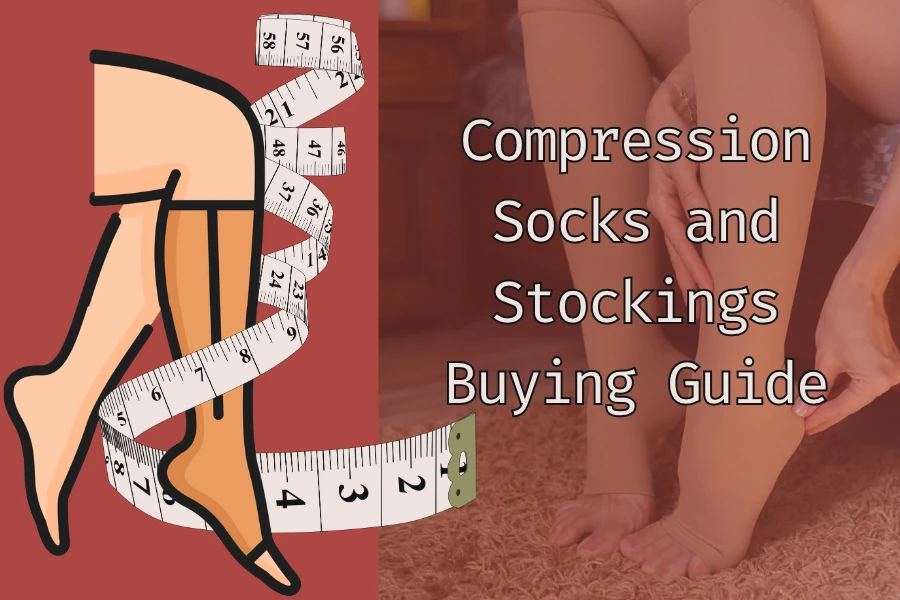
Compression Socks and Stockings Buying Guide: How to Choose the Right Size and Style
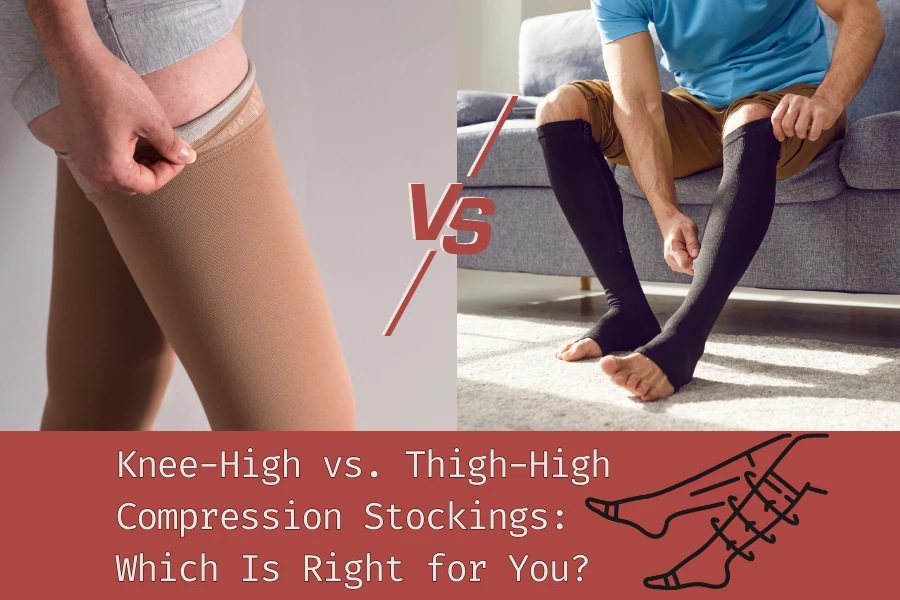
Knee-High vs. Thigh-High Compression Stockings: Which Is Right for You?
What Compression Level Do I Need? Understanding mmHg for Compression Socks
Best Compression Socks for Varicose Veins: How to Choose the Right Pair