Reusable vs Disposable Leg Bags: Which Urinary Leg Bag Is Right for You?
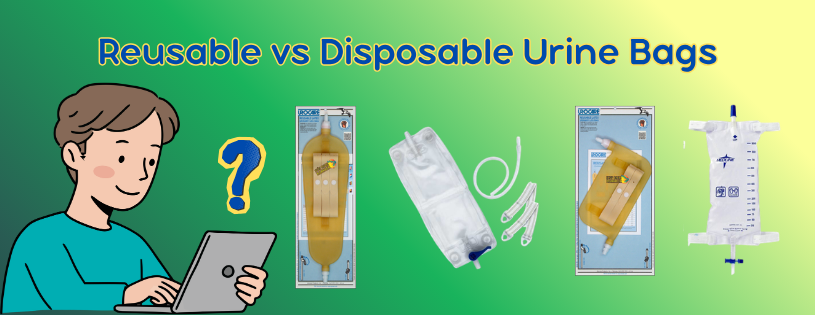
Reusable vs Disposable Leg Bags: Which Urinary Leg Bag Is Right for You?
Urinary leg bags help manage urine drainage during the day while allowing the user to stay active and move freely. Whether used with a Foley catheter, a condom catheter, or another urinary drainage setup, the right leg bag can make daily routines easier, cleaner, and more dependable during short-term recovery or long-term bladder management.
Incontinence management needs vary from person to person, so it helps to look closely at the options available and decide what option is best for you. Factors like routine, comfort, maintenance needs, and overall convenience all play an important role in finding the right catheter bag.
Reusable vs Disposable Leg Bags: What’s the Difference?
Reusable and disposable urine drainage bags serve the same basic purpose: Both connect to a catheter and drain urine during the day to manage incontinence needs. The main difference is in how the bag itself is built, how it is maintained, and how it is replaced over time.
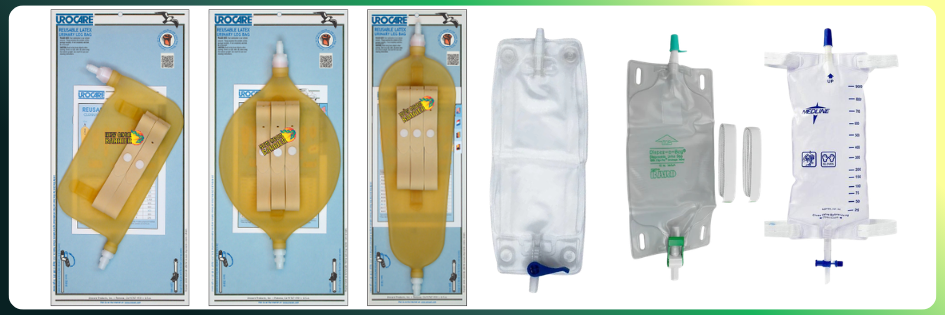
Reusable urine bags are made for repeated use rather than full-bag replacement. Most (but not all) reusable systems are built as a parts-based system that works together. For example, the Urocare Reusable Leg Bag line uses a top adaptor, little red valve, and bottom drain to create a washable and useful bag. A parts-based system means easy replacement of one broken or faulty piece, instead of throwing out the entire catheter bag system. An important facet of reusable bags is that they require a specific cleaning routine to keep them in tip-top shape.
Disposable bags are designed to be used for a much shorter period and replaced as a complete unit. When the bag has been used or a problem arises with it, the entire urine pouch is replaced instead of certain parts. This means disposable bags are a more straightforward option in terms of setup and replacement.
Benefits of Reusable Pouches
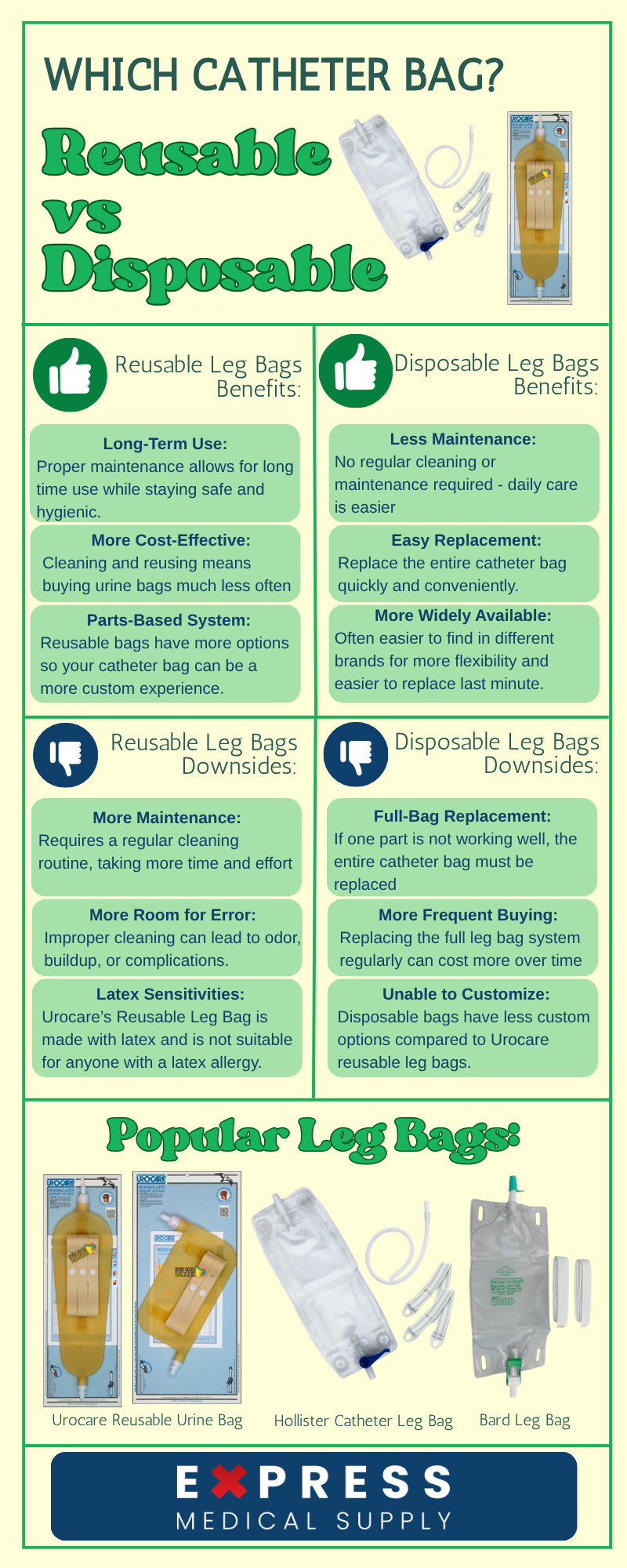
Reusable catheter leg bags can be a good fit for people who would rather do maintenance on one system than keep replacing full bags on a regular basis. In a parts-based setup like Urocare’s reusable line, the bag is built to be cleaned and used easily for a long period, with certain parts replaced when needed instead of throwing the whole thing away.
Benefits of All Reusable Catheter Bags
- Long-Term Use
Proper maintenance on reusable bags allows long use, while still being safe and hygienic. - More Cost-Effective
Cleaning the bag and reusing it means buying urinary pouches a lot less often, which can be a large help for those on a fixed budget.
Benefits of Urocare Reusable Leg Bags
- Parts-Based System
Being able to replace specific parts helps the bag last even longer. - Useful Additional Products
Items like the cleaning brush or straight-thru adapter are sold separately, but can be very helpful to the maintenance of your urinary pouch.
Downsides of Reusable Urine Bags
Reusable pouches can be a strong option for long-term use, but they also ask more from the user. Instead of simply replacing the whole bag and moving on, the system needs regular cleaning, attention, and correct upkeep to stay safe and work the way it should.
Downsides of All Reusable Urine Bags
- More Maintenance
Reusable bags need a regular cleaning routine, which can take more time and effort than simply changing to a new bag. - More Room for Error
If the bag is not cleaned or maintained the right way, it can lead to odor, buildup, or other complications that affect how well the system works.
Downsides of Urocare Reusable Leg Bags
- Specific Cleaning Requirements
Urocare reusable bags have their own cleaning process, so they cannot be cleaned the same way as every other urinary pouch. - Material Sensitivities
Urocare’s reusable leg bag line is made with latex, which means it is not the right choice for anyone with an allergy to latex.
Benefits of Disposable Leg Bags
Disposable urine pouches can be a good fit for people who want a simpler routine and less upkeep. Instead of cleaning and reusing the same system, the full bag is replaced as needed, which can make day-to-day management more straightforward.
Benefits of All Disposable Leg Bags
- Less Maintenance
With no regular cleaning or maintenance required, daily care is much easier. - Easy Replacement
Replacing the entire bag at once can be more convenient and quicker than cleaning it. - Good for Backups
Disposable bags can be useful as extras on hand for travel, busy days, or times when cleaning a reusable bag is less practical. - More Widely Available
Disposable urinary catheter bags are often easier to find in different sizes and styles, which gives users more flexibility.
Downsides of Disposable Urine Bags
Disposable leg pouches can make daily care easier, but that convenience also comes with tradeoffs. Since the whole bag is replaced instead of maintained, disposable systems can lead to more frequent purchases and less flexibility when one part wears out.
Downsides of All Disposable Urine Bags
- Full-Bag Replacement
If one part stops working well, the whole bag needs to be replaced. - More Frequent Buying
Replacing the full bag on a regular basis can cost more over time. - Needs Backup Supply
Disposable bags work best when extra replacements are always on hand.
How to Choose Between Reusable and Disposable Leg Bags
Choosing between reusable and disposable pouches usually comes down to daily routine, comfort with maintenance, and what feels easiest to manage over time. Some users like the longer-term value of a reusable system, while others prefer the simplicity of replacing a full bag and moving on. The right fit depends less on which type sounds better on paper and more on which one works best in real life.
A Reusable Bag May Be Better If
The user does not mind regular cleaning, wants longer use from one system, and likes the idea of replacing certain parts instead of the whole bag.
A Disposable Bag May Be Better If
The user wants a simpler routine, less upkeep, and the convenience of replacing the full bag at once.
Some Users Do Better With Both
A reusable bag can work well as the main day-to-day system, while disposable bags can be helpful as backups for travel, busy days, or times when cleaning is less practical.
Some Things Matter Either Way
Good drainage habits still matter no matter which type is used. The bag still needs to be worn correctly, kept below bladder level, emptied regularly, and kept as clean and secure as possible.
Material Can Also Matter
Not all reusable bags are made from the same materials. For example, Urocare’s reusable line is made with latex, so material sensitivity can also be part of the decision.
Frequently Asked Questions About Reusable vs Disposable Leg Bags

Which is better: reusable or disposable leg bags?
How often should you replace a disposable leg bag?
How long do reusable leg bags last?
Are reusable leg pouches safe?
Do disposable urine bags reduce the risk of infection?
Which option is more cost-effective?
Are reusable pouches harder to use?
Can you switch between reusable and disposable leg bags?
Which type of leg bag is better for travel?
Final Thoughts on Reusable vs Disposable Leg Bags
For people managing incontinence with a catheter, the goal is still the same: steady urine drainage during the day that feels practical and easy to manage. Reusable and disposable urinary pouches both do that job, but the routine is different. Reusable bags can help with long-term savings, while disposable bags can make things simpler with replacing the entire bag. In Urocare’s reusable line, replaceable parts can add even more long-term value.
The right choice depends on the person using it. Cleaning routine, budget, travel, material sensitivities, and available help can all make one option a better fit than the other. Some people stick with reusable bags or disposable bags only, while others use a reusable bag most of the time and keep disposable bags as backups. In the end, the best leg bag is the one that works safely and fits into the user’s routine without making day-to-day care harder than it needs to be.
Explore Our Newest Medical Guides & Insights

Compression Stockings and Socks Resource Center: FAQs and Related Reading

Compression Socks and Stockings Buying Guide: How to Choose the Right Size and Style

Knee-High vs. Thigh-High Compression Stockings: Which Is Right for You?

What Compression Level Do I Need? Understanding mmHg for Compression Socks

Best Compression Socks for Varicose Veins: How to Choose the Right Pair