Tattoo Shop Sanitation Basics: Building a Clean, Repeatable Workflow
Tattoo Shop Sanitation Basics: Building a Clean, Repeatable Workflow
A clean tattoo workflow is built on a few systems that work together, not random supplies. Station turnover starts the process by resetting the environment so the next setup begins on sanitized surfaces and with disinfected tools. During tattooing, personal protective equipment (PPE) means gloves and masks used to reduce exposure risk. Hand hygiene and skin prep support clean transitions when switching tasks. Once the tattoo is finished, dressings and bandaging help protect fresh work while still allowing practical monitoring and comfortable coverage. Behind the scenes, disposable setup and cleanup supplies help limit what gets touched and what needs to be cleaned between clients.
Tattoo Shop Disinfection and Station Turnover Between Clients
Disinfection and station turnover is the reset step between clients that brings the work area back to a clean baseline before the next setup begins. In a tattoo shop, these products are meant for hard, non-porous surfaces that get frequent contact, like tattoo tables, chairs, trays, counters, and other wipeable station surfaces. It is important to follow the exact label instructions for the disinfectant being used. This includes the required surface wet contact time and any stated pre-cleaning steps. A quick wipe alone does not sanitize a surface, because disinfectants only work as intended when the surface stays visibly wet for the full contact time listed on the product label. The simplest workflow is to remove any visible residue first, then apply a disinfectant so the surface stays visibly wet for the label contact time before air drying.
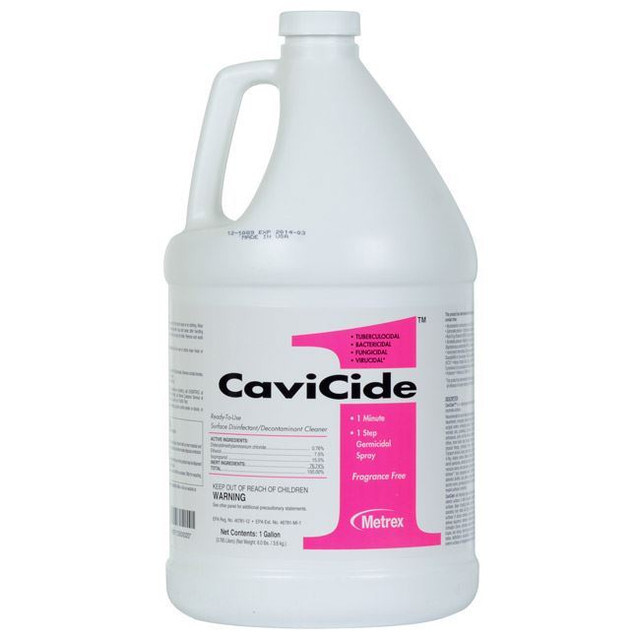 For shopping, there are two main formats that cover most turnover needs: liquid disinfectant for broader coverage and pre-saturated wipes for fast, controlled wipe-downs. CaviCide 1 is a ready-to-use liquid disinfectant sold as a gallon bottle, available individually or by the case, which fits shops that want a dedicated pour or spray step for full-surface turnover. CaviWipes and Super Sani Cloth are pre-saturated disinfectant wipe options sold in resealable tubs and cases, which fits stations that prefer grab-and-wipe simplicity while still following proper wet contact time.
PPE and Barrier Protection for Tattoo Artists
PPE and barrier protection is the layer between the artist and anything that could contaminate hands, skin, or clothing during a service, especially when blood or Other Potentially Infectious Materials (OPIM), meaning body fluids that may carry germs, are reasonably anticipated. In a tattoo shop, this category is mainly gloves and masks used to reduce exposure risk, limit cross-contamination, and keep the workstation routine consistent when moving between touching the client, touching the setup, and doing cleanup. Most PPE in this category is sold in multiple sizes and is commonly stocked by the box for daily use, with cases for higher-volume shops.
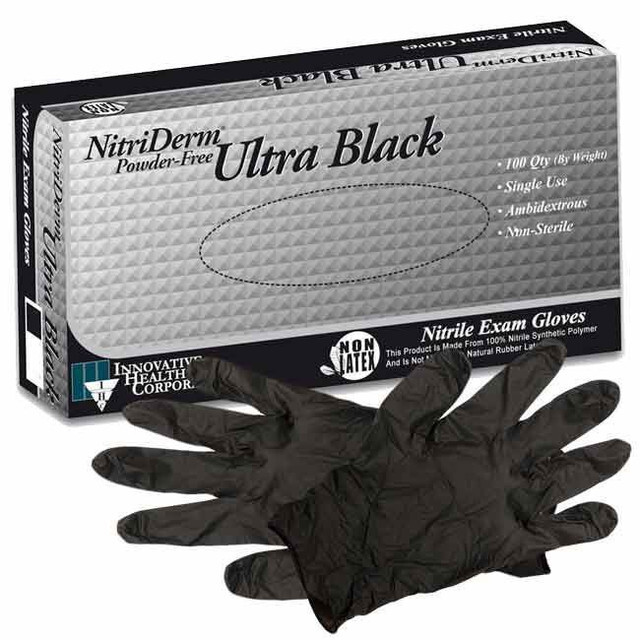 For a simple shopping approach, most pick a primary glove material and keep a backup option on hand for fit and sensitivity preferences. Innovative NitriDerm Ultra Black Synthetic Nitrile Exam Gloves are a latex-free glove option that fits tattooing and environmental cleanup, and they are typically purchased by the box in common exam-glove sizes. Black Wolf Latex Exam Gloves are another exam-glove option for protective gear, with material choice driven by shop preference and any sensitivity concerns.
Hand Hygiene and Skin Prep for Safe Tattooing
Hand hygiene and skin prep covers the basic steps that keep hands clean and prepare intact skin for tattooing based on shop protocol and local rules. In practice, this category supports cleaner transitions throughout the appointment, like before putting the gloves on, after glove removal, after touching non-clean surfaces, and before returning to the work area. These products are usually sold in easy-to-stock formats like wipe canisters, bottles, and boxes of single-use pads so a shop can keep supplies at each station without sharing containers.
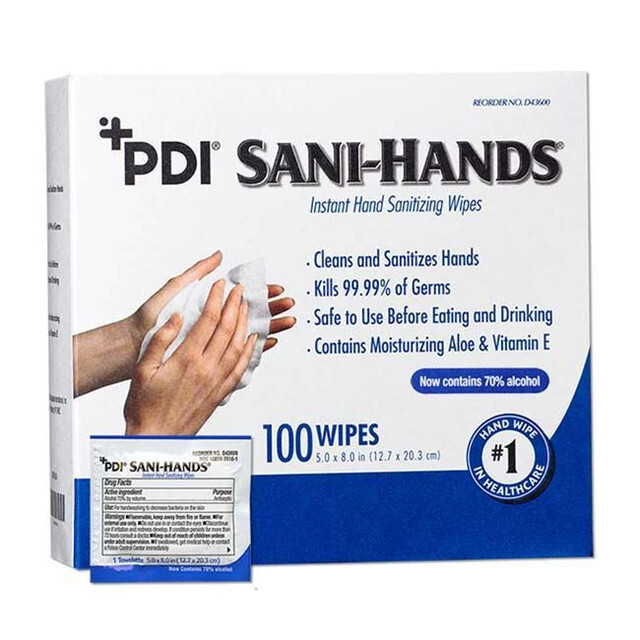 For shopping, it helps to think in three basic groups: hand cleaning support, skin cleansing, and intact-skin antisepsis. Intact-skin antisepsis means cleaning unbroken skin with an antiseptic wipe to reduce germs on the surface before a procedure step, using the shop’s protocol. PDI Sani-Hands Instant Hand Sanitizing Wipes are a fast option for hand hygiene when soap and water are not immediately available, and they are commonly stocked as canisters or cases for multiple stations. Dynarex Tincture of Green Soap is typically used for skin cleansing and stencil-related workflows, and it is sold in bottles that are easy to portion into smaller station containers. For single-use skin prep steps, Dynarex Alcohol Prep Pads are sold in boxed packs and provide a simple, controlled way to prep intact skin in line with shop protocol.
Tattoo Aftercare Dressings, Bandaging, and Fresh-Ink Protection
Dressing, bandaging, and aftercare protection focuses on the supplies used to protect fresh work right after a tattoo and support the first stage of healing. In daily operations, the goal is usually a clean protective layer that stays in place, plus a simple way to secure it without adding unnecessary irritation. This category is commonly stocked in two main formats: individually wrapped dressings and pads sold in boxes, and tapes or wraps sold by the roll so stations can be replenished quickly.
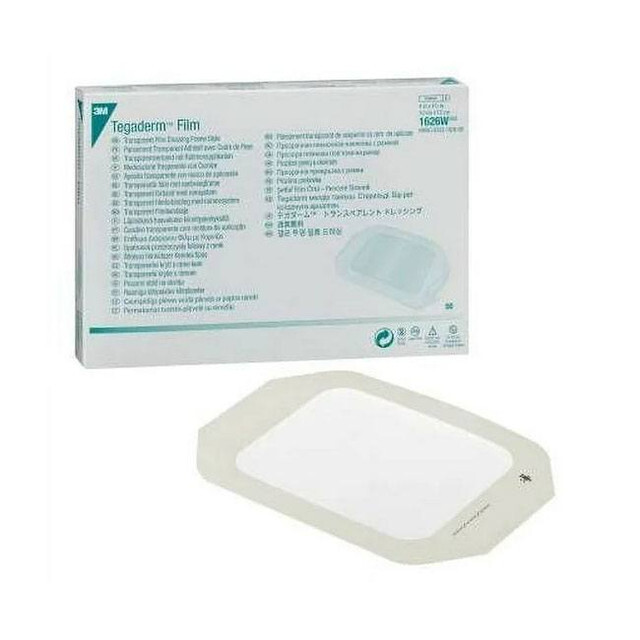 For a simple setup, it helps to have one transparent film option and one non-stick pad option, then choose a securement method that matches the placement. Transparent film dressings like 3M Tegaderm Transparent Film Dressing are used as a clear protective layer that allows visual checks without removing the dressing. Non-adherent pads like Telfa Ouchless are used when a non-stick contact layer is preferred for comfort and cleaner removal. For securing, paper tape like Micropore works well for smaller dressing jobs, while cohesive wrap like CoFlex can help hold dressings in place on arms and legs without relying only on adhesive.
Tattoo Station Setup, Disposable Supplies, and Cleanup Support
Station setup, disposables, and cleanup support covers the single-use items that help keep a workstation organized, reduce mess, and limit cross-contamination during and between appointments. In busy tattoo environments, these are the practical supplies that create clean work habits: placing barriers where fluids could contact surfaces, using single-use applicators instead of dipping into shared containers, and having proper disposal ready before the session starts.
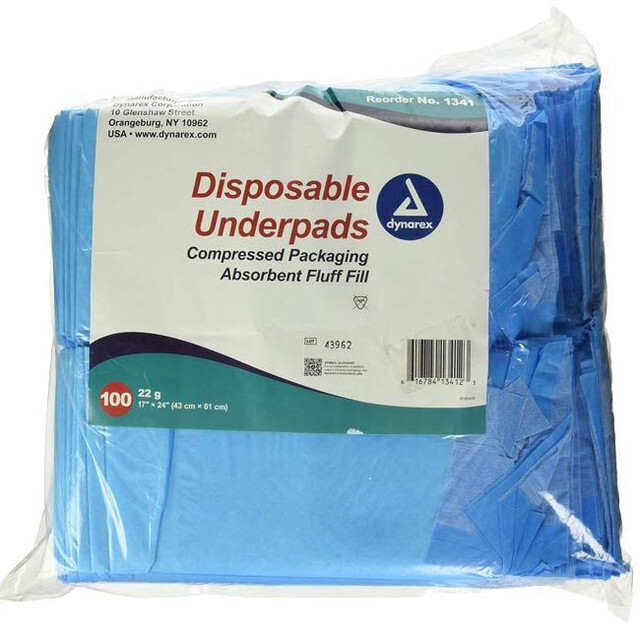 A simple setup usually includes an absorbent barrier or a few single-use tools for controlled application. Dynarex Disposable Chair Size Underpad with Polymer acts as an absorbent barrier on chairs or tables. It can also be used as a lap pad to help protect clothing and nearby surfaces. Tongue depressors are a straightforward single-use tool for dispensing creams, gels, ointments, or stencil products without contaminating the main container.
Tattoo Sanitation FAQs: Gloves, Disinfection, and Aftercare
These are some of the most common sanitation and setup questions tattoo professionals ask when building or reviewing their shop workflow.
Does wrapping surfaces and machines replace wiping it down?
No. Disposable barrier wrap helps prevent contamination, but it does not replace cleaning and disinfection of the underlying surface. Many state and local health regulations for tattoo and body art establishments require both: barriers on work surfaces that are replaced after each procedure, and cleaning plus disinfection of procedure areas between clients. A fast swipe that dries right away also does not reliably disinfect because disinfectants must stay visibly wet for the label’s required contact time to kill germs.
Should a tattoo artist change gloves any time they touch anything outside the set-up during a session?
Gloves should be changed when they are contaminated, torn, punctured, or compromised. Multiple state body art rules explicitly say gloves must be changed if they contact non-clean surfaces or objects, and that if the artist leaves the procedure area, gloves must be removed, hands washed, then a new pair put on when returning. If a touch breaks aseptic technique, meaning it breaks the “keep clean items clean” workflow, the safe move is remove gloves, perform hand hygiene, then re-glove before returning to the tattoo.
When and how often should hands be washed or sanitized during a tattoo procedure?
At minimum, some body art codes require handwashing before and after each procedure, and again any time gloves are removed, compromised, or the artist leaves the area during the procedure. Alcohol-based hand sanitizer (at least 60% alcohol) is an accepted option when soap and water are not immediately available, but it does not replace required handwashing steps in local rules or shop SOPs (standard operating procedures).
How long should a “second skin” style film dressing stay on, and what should someone do if it leaks or starts peeling early?
There is no single universal wear time because it depends on the specific film dressing and its instructions for use. For one common example, Saniderm’s instructions describe a first piece worn up to about 24 hours, then a second piece that can be worn several more days, with a total wear window not exceeding 7 days. For transparent film dressings like Tegaderm, product instructions commonly indicate it can be worn for multiple days but should be removed if it starts to leak or loses adhesion. If the film leaks, punctures, or lifts enough that water, dirt, or germs can get under it, the dressing is no longer acting as a protective seal, so it should be removed and aftercare should follow the instructions given for that product or the artist’s aftercare sheet.
What makes a workstation surface or tray “tattoo safe”?
A “tattoo safe” surface is one that can be reliably cleaned and disinfected between clients without absorbing fluids or being damaged by disinfectants. Body art rules commonly specify smooth, non-absorbent, easily cleanable, and easily sanitized worktable surfaces, plus disposable surface barriers that are replaced after each procedure. Many rules also require that procedure areas are cleaned and disinfected between services using an approved disinfectant. And the disinfectant has to be used correctly, including keeping the surface wet for the required contact time on the label.
Tattoo Shop Shopping Guide
Browse by category and skim each card for the tattoo-shop use. Each product name links to the item page.
Putting It All Together: Tattoo Shop Sanitation Supplies That Support Safer Workflows
When a tattoo shop builds its routine around a few repeatable standards, cleanliness stays consistent even on busy days. Station turnover sets the tone by resetting hard, non-porous surfaces the right way, using the correct disinfectant steps and label contact time. Protective gear, hand hygiene, and skin prep work together to reduce exposure risk and keep clean transitions consistent when switching between the client, the setup, and cleanup. Aftercare supplies support a clean finish by protecting fresh work while still allowing practical monitoring and comfortable coverage. Disposable setup tools and cleanup supplies help reduce cross-contamination by limiting shared contact points and keeping the workstation easier to manage. When these categories are stocked in the right formats and used according to shop protocol and state and local health regulations, the shop gets a safer station, a smoother process, and a more consistent client experience.
Explore Our Newest Medical Guides & Insights
Foley Catheter Guide: Uses, Sizes, Care, and How to Choose the Right Catheter

Medical Supplies You Should Always Keep at Home (And When You’ll Need Them)
How to Choose the Best Medical Tape for Every Situation
Tattoo Shop Sanitation Basics: Building a Clean, Repeatable Workflow
Hollister Ostomy Accessories and How They Can Help